According
to the International Diabetes Federation report in 2021, approximately 9 million adults suffer
from diabetes mellitus (DM), and the disease prevalence is reported to be 14.5%
in Türkiye (1). Deaths related to
diabetes mellitus (DM) constitute 4% of total deaths under the age of sixty,
and the major causes are acute or chronic complications. Among the acute
complications, are conditions related to hypo or hyperglycemia, while chronic
complications are grouped as micro and macrovascular complications in the
literature (2). Microvascular
complications include retinopathy, nephropathy, and neuropathy, whereas
macrovascular complications are atherosclerosis-related disorders that damage
the heart, brain, and lower extremity arteries, leading to myocardial
infarction, brain stroke, and limb amputation (3).
Drug development and design for diabetic complications are based on identifying
and targeting the mechanisms underlying disease processes, such as the
accumulation of abnormal proteins, inflammatory processes, oxidative stress,
and pathogenic complications. Elucidating these mechanisms may enable
increasing limited treatment options, developing new alternatives to existing
drugs, and creating new economic values (4).
The increased production of reactive oxygen species (ROS), leading to oxidative
stress, plays a critical role in the development of chronic complications of DM
(5). High levels of glucose and fatty acids also
trigger inflammatory-related
pathways, causing an increase in ROS and oxidative stress (6). Tumor necrosis factor-α (TNF-α) and
(interleukin 1-beta) IL-1β are pro-inflammatory cytokines that have been
indicated in the development of insulin resistance and pathogenesis of Type 2
Diabetes mellitus (T2DM) (7). Studies
have shown that TNF-α and IL-1β levels are high in the serum of diabetic
patients, in which insulin secretion is low or relatively deficient (8). Proinflammatory cytokines and acute-phase
reactants are thought to be associated with insulin resistance caused by
obesity in different tissues (9, 10).
TNF-
α is the first proinflammatory cytokine considered to be effective in the
pathogenesis of insulin resistance and T2DM. Studies on TNF-α have reported
that it reduces the expression of “Insulin Regulated Glucose Transporter Type
4” (GLUT4), which is found in adipocytes and skeletal and cardiac muscles (). On the other hand, IL1β is a
proinflammatory cytokine that modulates important metabolic processes,
including β-cell damage, insulin secretion, and β-cell apoptosis. There are
studies suggesting that chronically elevated levels of IL-1β in obese and type
2 diabetic individuals can lead to β-cell dysfunction. IL-1β signaling events
can induce acute-phase responses, low blood pressure, vasodilation, and fever, which are the common symptoms
of inflammatory responses ().
Declarations
Conflict of Interest
The authors declare no conflicting interest.
Data Availability
The datasets generated during and/or analyzed during the current study are available from the corresponding author on reasonable request.
Ethics Statement
The investigation was permitted by the Gazi University Ethics Committee, (Approval Date: 26.06.2020) and followed the instructions for the care and use of laboratory animals published by the "Compliance with ethical rules" specified in the 13th article of the Gazi University Ethics Committee.
Funding Information
Gazi University Scientific Research Projects Coordination Unit (Project no: 05/2020-24).
Herbal
formulations have been used as integrative treatments for various health issues since ancient
times. Numerous studies in the literature demonstrate that bioactive molecules
derived from medicinal plants possess multiple pharmacological properties
capable of preventing various destructive cellular damages, including
inflammation (13). Türkiye, with a rich
flora comprising more than 12,000 plants, is home to many medicinal plants and
associated prescriptions from the Anatolian culture.
Rosa
canina, a
medicinal plant that can be found in almost every region of Türkiye (14), has been used in integrative medicine
prescriptions dating back to the 15th century for the prevention and treatment
of conditions such as the common cold, gastrointestinal disorders, diabetes,
kidney disorders, and other infections (15).
Most of the plant members of the Rosaceae have been used in traditional Turkish
medicine to treat inflammations, injuries, certain types of cancer, microbial
infections, diarrhea, diabetes mellitus, and other disorders (16). R. canina extract is a common
plant that is used in many cultures for the treatment of different diseases and
is an emerging candidate as a source for drug discovery in diabetes mellitus.
Its fruits with or without seeds are used in traditional medicine to prevent
scurvy, but also in different pathological conditions (17). Moreover, R. canina roots have been used to treat
diabetes mellitus in Kırıkkale province of Türkiye. Extracts of the species is
rich in vitamins (especially vitamin C) and phenolic compounds. It has been
reported that R. canina extract has antioxidant, antimicrobial, and
anti-inflammatory activities (18).
Although there are many studies on R. canina potential antioxidant and
anti-inflammatory activities in various parts of the plant (e.g., fruits,
leaves, rose hip with seeds), there is no research investigating the activity
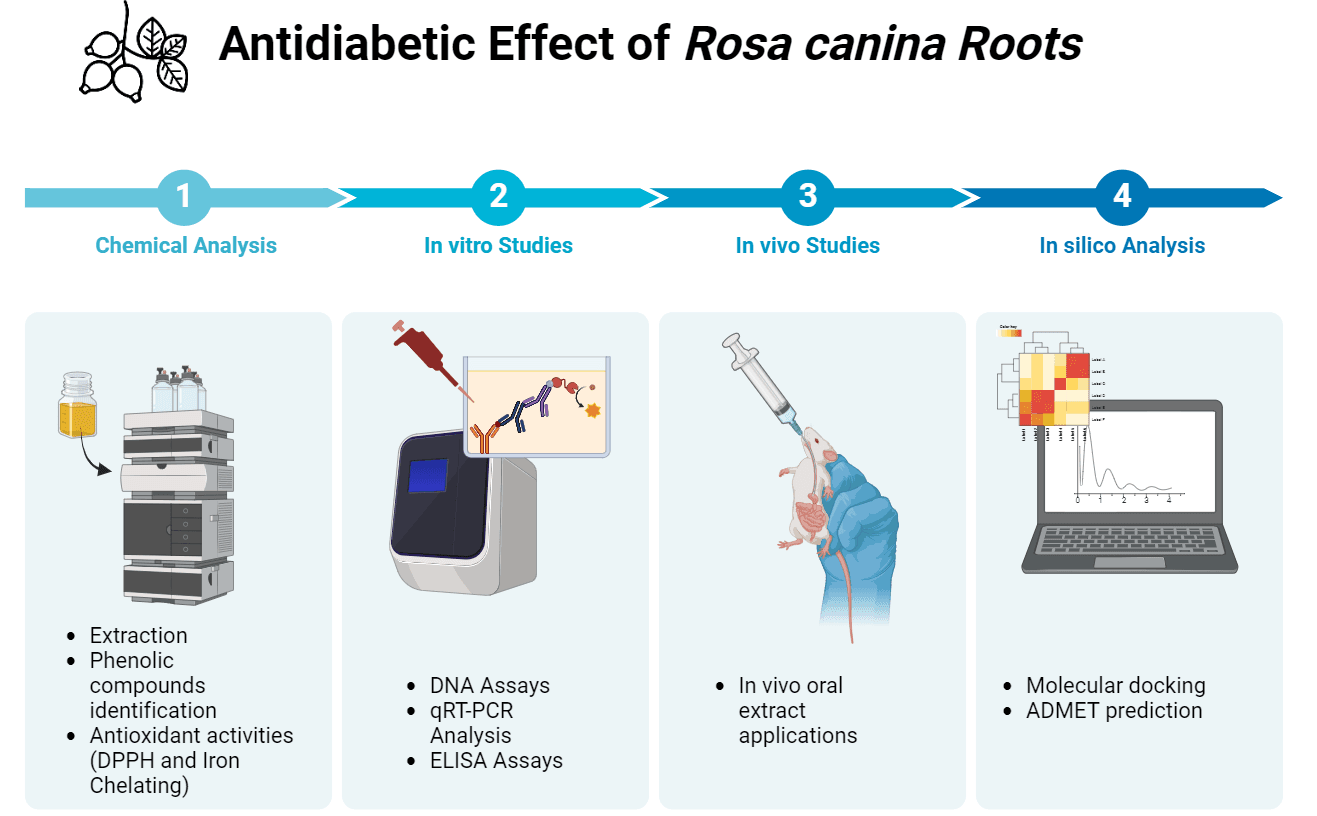
of root extract. The objective of the study is to assess the biochemical
content and biotherapeutic effects of methanol and water extracts of R.
canina roots through in vitro, in vivo, and in silico
evaluations.
Experimental Section
Materials
All chemicals for the present
study were purchased from Sigma Aldrich (St. Louis, MO, USA) and all the
standards were of purity >95%. Additionally, Ultrapure water was acquired
by a Milli-Q system (Millipore, Bedford, MA, USA).
Extract Preparation of Rosa Canina Root
R.
canina
species was collected from Kırıkkale-Delice-Halitli, which is in the Central
Kızılırmak Section of the Central Anatolia Region in June-August 2019 by H. Taşkın (Gazi U. MolBiol
Lab) and identified in the Herbarium of Gazi University. After the
drying process, 50 g of powdered root sample was soaked with 500 ml of methanol
(MRE) and water (WRE), separately. Then samples were placed into dark-colored sealed
bottles and dept for 16 days with occasional shaking and stirring at room
temperature (25°C). Then, extracts were filtered with Whatman No. 1 filter
papers, and filtrates were concentrated with a rotary evaporator at 337 Mbar
pressure and a 60°C water bath, respectively.
Antioxidant Radical Scavenging Activity
The
antioxidant activities of methanol and aqueous plant extracts were assessed
using the 2,2-diphenyl-1-picrylhydrazyl (DPPH) assay (19). For the evaluation of enzymatic activity, 200 µL of plant
extracts at varying concentrations were mixed with 500 µL of 120 µM DPPH
ethanol solution and 500 µL of pure ethanol. The mixture was then incubated at
room temperature in the dark for 30 min. Following incubation, absorbance measurements at 517 nm
were taken to determine the intensity of the purple color resulting from the
reaction. Butylated hydroxytoluene (BHT) was used as a reference in the assay.
The percentage antioxidant activity of plant extracts prepared at different
concentrations was calculated by using the Equation 1. IC50 value was calculated from the
standard graph of DPPH activity, and all measurements were performed in
triplicate.
Equation 1
Antioxidant Iron Chelating Activity
The
chelation of ferrous ions by extracts was determined by standard method (20). Briefly, 0.05 μl of 2 mM FeCl2 was added
to 1 ml of various quantities of the extract (1, 0.5, 0.25, 0.125, 0.06 mg/ml).
The reaction was initiated by the addition of 0.2 ml of 5 mM ferrozine
solution. The mixture was shaken vigorously and left at room temperature for 10
min, then, the
absorbance was measured at 562 nm (Shimadzu UV-1800). As controls, solvents
without extracts were used. The percent chelating activity of ferrous ions of
the plant extracts
was determined by using
the Equation 2.
The
total phenolic compound contents of the extracts were determined by the
folin-ciocalteau method (21). First,
extract samples (0.5 ml extract, different dilutions) were mixed with 2.5 ml of
0.2 N folin-ciocalteau reagent (Sigma–Aldrich) for 3 min, and then 2.0 ml of 75
g/L sodium carbonate was added. The absorbance of the reaction was measured at
760 nm using a spectrophotometer (Shimadzu UV-1800) after 2 h of incubation at
room temperature. The standard curve was plotted using 50 to 250 mg/ml
solutions of gallic acid in methanol/water (1:1, v/v). All measurements were
taken in triplicate. Gallic acid is used as a reference compound and the total
phenolic content value is expressed as gallic acid equivalent per gram of
extract (mg GAE/g).
Determination of Phenolic Compounds
The
slightly modified high-performance liquid chromatography (HPLC) approach
described was employed to identify specific components of R. canina root
extracts (22). Shimadzu LC-20AD
Prominence HPLC system (Shimadzu Corp., Kyoto, Japan) consisted of a diode
array detector model SPD-M10AVP equipped with a pump system LC-20AT with an
autosampler model SIL-20AC, CTO-10AS VP column heater and DGU-20A5 degasser
units. The column was an Inertsil ODS4 (250 x 4.6 mm I.D.) with a 5 mm packing.
Operations were controlled with the HPLC software version of the LC solution. A
10 μl aliquot of sample was injected and analyzed in a column at 40 C. Two
solvents were used during the analysis. Solvent A was composed of distilled
water–phosphoric acid (PA, 0.2%) and solvent B consisted of acetonitrile (ACN).
A constant flow of 0.6 ml/min was applied with the following gradient elution:
0 min, 70% B; 15 min, 65% B; 20 min, 55% B; 25 min, 45% B; 30 min, 45% B; 35
min, 30% B; 40 min, 15% B; 45 min, 15% B. The column effluent was monitored at
240, 260, 280, 320, and 360 nm wavelengths for the information and data
acquired in all the PDA chromatograms. Since phenolic compounds different
absorb effectively in the UV region with varying absorptive strength and
response times due to their unique structures, selecting appropriate detection
wavelengths for each analyte should be carefully considered. It was studied by
scanning the wavelength range of 190-650 nm with a PDA detector. Solvents and
mobile phases to be used in chromatographic processes were degassed before
being used and filtered through a 0.45 μm nylon membrane. Gallic acid, citric
acid, syringic acid, caffeic acid, protocatechuic acid, p-coumaric acid,
ferulic acid, chlorogenic acid, gentisic acid, catechin, kaempferol 3-O- glucoside,
rutin, quercetin, myricetin, ellaigic acid,
kaempferol-3-O-(p-coumaroyl)-glucoside (trans-tiliroside), and galloylquinic
acid were used as standards in the RE among the tested standards. Standard
solutions used in calibration graphs and determining other validation
parameters were diluted from a stock solution of 100 mgL-1. The
standard stock solutions (100 mgL-1) were prepared in H2O-MeOH
(20:80 v/v) and working standards were freshly produced by diluting the stock
solution in the same solvent at concentrations ranging from 0.01 mgL-1
to 150 mgL-1. The calibration curve was created by graphing the
concentration of each standard against the peak area. To extend the shelf life
of all solutions, they were kept at 4°C.
DNA Cleavage, Binding Activity, and Protection Assay
First,
the pBR322 plasmid DNA was incubated with different concentrations (1000, 500,
250, 125 g/ml) of root extract and incubated in the dark at 37°C for 24 h, followed by 1% agarose
gel electrophoresis. Then, extract-treated plasmid DNA samples and control DNA
(untreated with extract) were loaded into the wells of the agarose gel to
characterize the extract-induced plasmid conformational changes. Gel electrophoresis
was carried out at 80 V for 120 min, followed by staining with ethidium bromide
and visualized under UV light with a Biometra UV imager and results were
photographed. The extract-plasmid DNA mixtures were first incubated for 24 h at
37°C and then subjected to HindIII and BamH1 digestion. The mixtures were
incubated at 37°C for another 1 h and confirmation of the restriction digest
was determined by 1% (w/v) agarose gel electrophoresis. The gel was visualized
under UV light with a Biometra UV-imager and results were photographed (23). DNA damage inhibition potential of MRE and WRE of R. canina was
evaluated using plasmid DNA. Oxidative damage to plasmid DNA was induced using
hydroxyl (•OH) radical generated from the ultraviolet (UV)/H2O2-radical system
as described (24). A reaction mixture
containing 20 μL of plant extract of different concentrations (25-50 μg/mL),
pBR322 DNA (0.25 μg), and 20 μL Fenton’s reagent (30 mmol/L H2O2, 500 μmol/
L-ascorbic acid and 800 μmol /L FeCl3 was incubated for 40 min at 37°C and
analyzed on a 1% agarose gel by staining with ethidium bromide. Additionally,
in this assay, internal control was untreated plasmid DNA while negative
control was DNA and distilled water mixture. Control group tubes were exposed
UV-irradiation at 230 nm using a UV transilluminator (BioDoc Analyzer Biometra)
for 30 min. After irradiation, samples were analyzed by 1% agarose gel
electrophoresis in TAE buffer and results were photographed.
Animal Studies
Permission
for this in vivo study with Project ID 6367 and project code 05/2020-24 was accepted and
supported by the Gazi
University Scientific Research Projects Unit (BAP) on 26.06.2020 with
G.Ü.ET-20.037 and experimental animal applications were carried out and completed by following
"Compliance with ethical rules" specified in the 13th article of the
Gazi University Ethics Committee. Experiments were performed with 42 male Wistar
rats weighing between 250 and
300g. Rats were housed in cages (7 animals/cage) with a controlled temperature
(25°C) and a 12:12-h light-dark cycle. Animals were randomly divided into 6
groups and each group contained 7 rats; Group I: healthy, negative control
(HC), solvent injected rats; Group II: diabetic control (DC) and Groups III-VI:
low-dose methanol
extract (LDME), high-dose
methanol extract (HDME), low-dose
water extract (LDWE) and high-dose
water extract (HDWE) treated diabetic groups, respectively (Table 1).
Streptozotocin (STZ) freshly prepared in sodium citrate buffer (50 mM, pH 4.5) was administered
intraperitoneally (60mg/kg) to
the rats for the DM induction. After 72 h, fasting blood glucose levels were measured
and levels of ≥200mg/dL were considered diabetic. Only sodium citrate buffer
was injected into the
healthy control group and R. canina extracts were administered orally
(250mg/kg or 500mg/kg) 5 days after STZ injection to the study groups every
morning (10.00 am) for 14 days (25). The
extract type and dosage administered
to the rats are
presented in Table 1. After
15 days of extract administration, all studied groups were sacrificed
under deep anesthesia, and intracardiac blood samples were collected and placed
into EDTA-containing tubes (5ml). Then, the samples were centrifuged at 3500 rpm for 10 min and the collected plasma
samples were aliquoted and stored at −80 °C for further analysis. Also, RNA
isolation was performed by using the HP-RNA isolation kit (11828665001, Roche,
Germany), and reverse transcription was performed using the transcriptor cDNA
synthesis kit (04896866001, Roche, Germany). Additionally, IL-1ß and TNF-ɑ were
determined by using IL-1β and TNF-ɑ rat ELISA kits (E0119Ra, E0764Ra Bioassay
Technology Laboratory, Shanghai, China).
Table 1. Experimental arrangement of study groups (n=7).
Study group
Solution
injected intraperitoneally
Substance to be
given by gavage
Group 1- Healthy
control (HC)
Citrate buffer
only
Water
Group 2- Diabetic
control (DC)
Streptozotocin(+)
Water
Group 3- Low dose
methanol extract (LDME) -treated
Streptozotocin(+)
Methanol extract
dissolved in water,
250 mg/kg/day
Group 4- High dose
methanol extract (HDME) -treated
Streptozotocin(+)
Methanol extract
dissolved in water,
500 mg/kg/day
Group 5- Low dose
water extract (LDWE) -treated
Streptozotocin(+)
Water extract,
250 mg/kg/day
Group 6- High dose
water extract (HDWE) -treated
Streptozotocin(+)
Water extract,
500 mg/kg/day
Gene Expression Analyses by qRT-PCR
Total
RNA was isolated and reverse-transcribed into complementary DNA (cDNA).
Relative gene expression levels of IL-1ß and TNF-ɑ were measured by real-time
PCR (Light Cycler® 480) using a TAQMAN® gene expression test kit (04707494001
Roche, Germany). The results were normalized to the expression of housekeeping
gene β actin (4331182 Roche, Germany), and the sequence of primers was designed
for an annealing temperature of 56°C. The designed primers were used for
relative quantification of TNF-ɑ (4331182 Roche, Germany) and IL-1ß (4331182
Roche, Germany) and the gene was as follows:
Reactions
were optimized to a final volume of 20μl and contained, 1x reaction buffer, 0.2
mM of each deoxynucleotide, 2.5 mM MgCl2, 0.5 μM of each primer, 10 μL master
mix, 2.5 μL distilled water and 6 μL DNA. RT-PCR amplification was performed
with a Light Cycler® 480 Real-Time PCR system (Roche, Germany) and analyzed
with the provided software. This three-step run protocol was used: (i) an
initial hold of 10 min
at 95°C (ii) an amplification and quantification cycle with 40 repeats
(denaturation 15 sec at 95°C), and (iii) annealing 1 min at 60°C with 1 min
extension. Lastly, TNF-α and IL-1ß genes
for each sample were expressed with an arbitrary ratio of the quantity of mRNA
to that of β-actin, and the amplification data were analyzed following the
2-ΔΔCt method.
Cytokine Level Measurements
For
cytokine level determination, plasma and adipose tissue samples were examined
and TNF-α and IL- 1ß levels were quantified by enzyme-linked immunosorbent
assay (ELISA) (26). Approximately 50 mg
of adipose tissue was placed into microcentrifuge tubes and washed with PBS
buffer by vortexing. RIPA buffer (50 mM Tris HCl, 300 mM NaCl, 2 mM EDTA, 1%
(v/v) NP-40, 0.5% (w/v) sodium deoxycholate, 0.1% (w/v) SDS, and 1 mM PMSF pH
7.4) added into the sample tubes (1:9, w/v) and homogenized on the ice bath (20
sec homogenization followed by 60 sec incubation on ice, repeated 2 times)
using a homogenizer (PRO200, PRO Scientific Inc. Monroe, CT USA). Then all
samples were centrifuged at 12,200 g for 20 min at 4°C. Finally, the
supernatant was transferred to a new microcentrifuge tube without disturbing
the upper fat and lower pellet layers for ELISA assays.
In Silico Analysis
The
antidiabetic efficacy of R. canina, which has antioxidant,
anti-inflammatory, analgesic, hypotensive, and wound healing properties, was
evaluated by using molecular docking analysis. The antidiabetic and
anti-inflammatory activities of R. canina were investigated at the
molecular level. From the phenolic chemical composition of R. canina, all
compounds were selected as active ligands and each of them was analyzed. From
the protein data bank, the crystal structure of TNF-α and IL-1ß were provided
(PDB: 2AZ5 and PDB: 9ILB) as the receptors for molecular docking analysis. The
Autodock Vina module and Chimera v1.6 software were implemented for molecular
docking analysis, and the SwissADME web-based tool was used for ADMET
predictions. All ligands that were considered to be possible inhibitors of
proinflammatory cytokines were optimized, and the energy minimization process
was performed using the AMBER module of Chimera (27).
Ions and other unwanted molecules were deleted, and polar hydrogens were added
as the preprocessing of the proteins. By creating a 3D grid box (for 2AZ5 (-5x82x28) and for
9ILB (-17x4x5) with 24 grid box size for each protein) centered on each
protein, docking processes were performed. Also, all pharmacokinetic and
physicochemical properties of the ligands that have the highest binding
affinity scores of R. canina were calculated using the SwissADME
web-based tool by analyzing canonical SMILES formulations.
Statistical Analysis
All
the data were given as Mean ± S.D. Statistical significance was evaluated by one-way
analysis of variance (ANOVA) using SPSS version 7.5 (SPSS, Cary, USA), and the
Kruskal Wallis test was used to compare IL-1β and TNF-α cytokine levels of both
serum and adipose tissues with control groups and differences were considered
significant at p ≤ 0.05.
Results
Antioxidant Radical Scavenging Activity, Iron Chelating Activity, and Total Phenolic Content
The
scavenging activity of root extract compared to BHT is given in Table 2. The
results indicate that the scavenging activity of the root extract was higher
than that of the BHT. The IC50 values were 23.31±0.14 μg/ml, 26.94±0.82 μg/ml,
and 96.47±032 μg/ml for WRE, MRE, and BHT, respectively. The level of phenolic
content was expressed in terms of gallic acid equivalent per gram of plant
extract. The total phenolic content of the water root extract was 34.96 ± 3.91
μg GAE/mg, while the methanol root extract was 16.98 ± 0.75 μg GAE/mg (Table
2). IC50 of the water root extract for iron chelating activity was 0.91 ± 0.11
μg/ml which is higher than methanol root extract (0.77 ± 0.24 μg/ml) (Table 2).
Table 2. The antioxidant properties of Rosa canina root extracts.
Parameter
Result
Methanol
Water
BHT
IC50 for DPPH radical scavenger activity (µg/ml)
26.94 ± 0.82
23.31 ± 0.14
96.47 ± 0.32
Total Phenolic Content (μg GAE/mg)
16.98 ± 0.75
34.96 ± 3.91
-
IC50 for iron chelation (µg/ml)
10.77 ± 0.24
0.91 ± 0.11
-
Phenolic Compounds
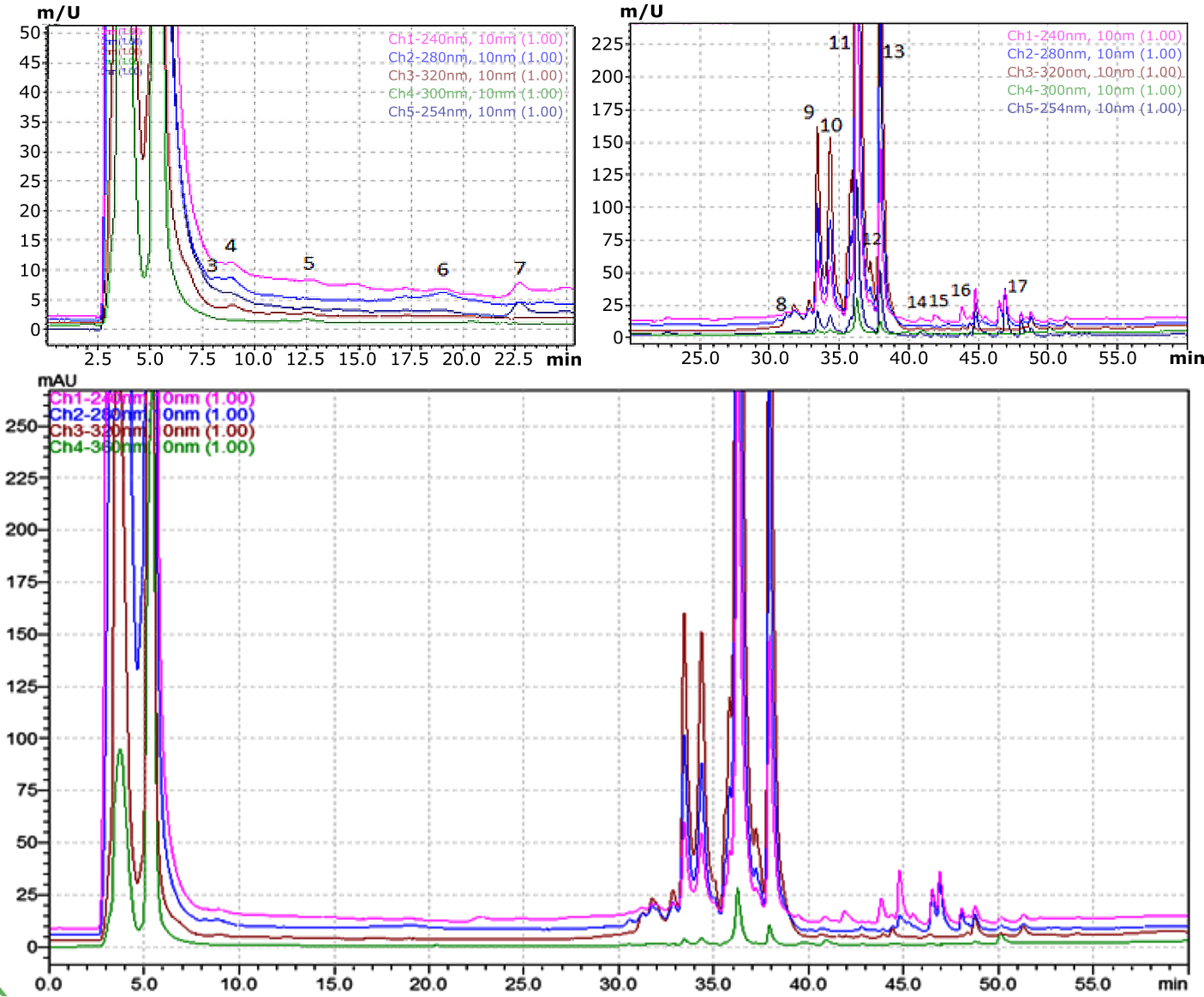
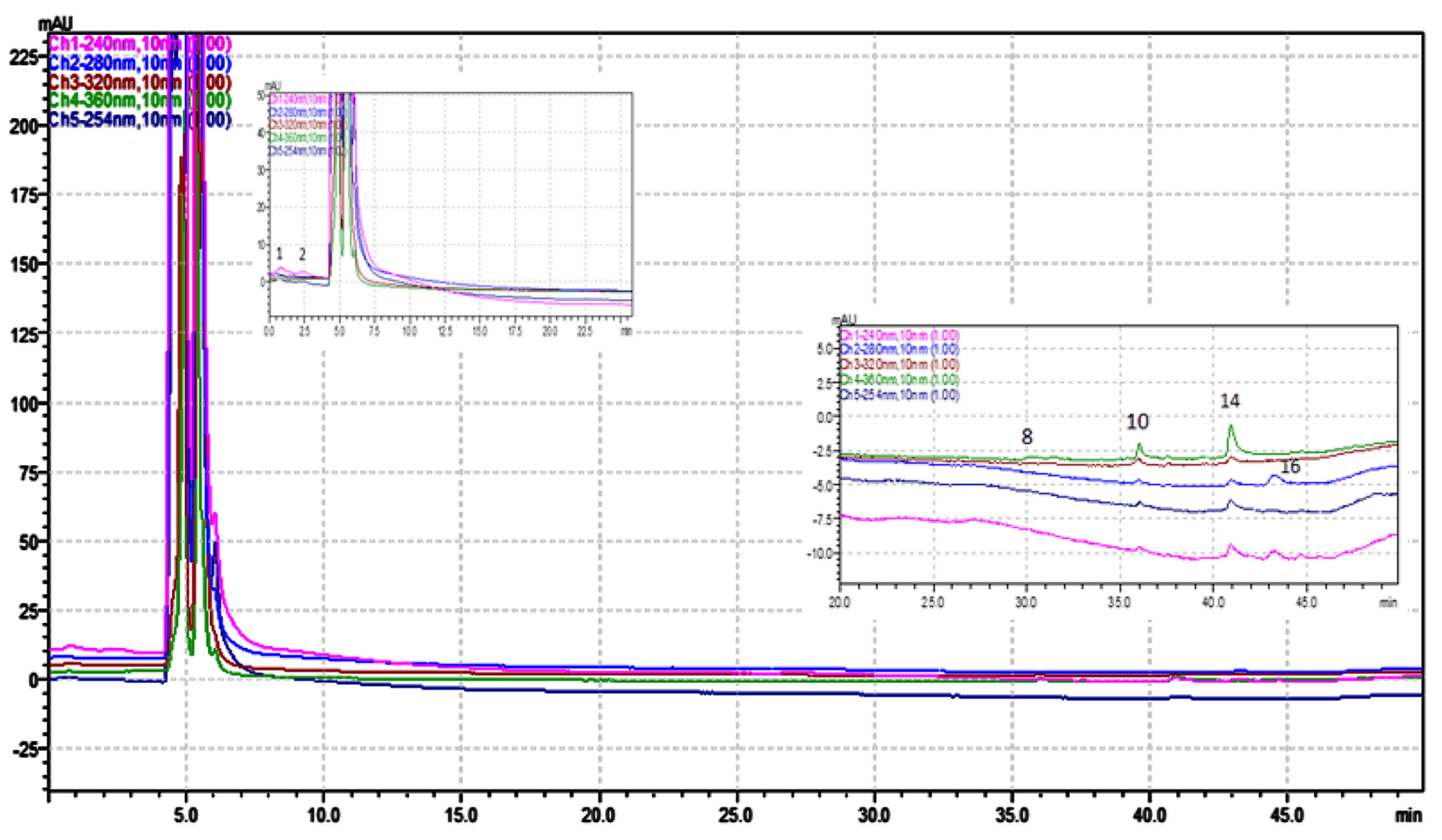
Polyphenolic compounds in R. canina were quantified using an HPLC-PDA system with authentic standards, revealing seventeen compounds (Figures 1 and 2; Table 3). The WRE contained higher myricetin and catechin levels, while the MRE had more kaempferol 3-O-glucoside, quercetin, 2,5-dihydroxybenzoic acid, and catechin. Both extracts shared catechin, chlorogenic acid, myricetin, and kaempferol-3-O-(p-coumaroyl)-glucoside. Table 3 shows individual phenolic component amounts in MRE.
Figure 1. HPLC/PDA chromatogram, visualized at different wavelengths, of methanolic extract from the R. canina.
Figure 2. HPLC/PDA chromatogram, visualized at different wavelengths, of water extract from the R. canina.
Table 3. Phenolic compounds quantification in R. canina root extracts.
Note: contents
of phenolics are expressed as milligrams per gram dry weight (mg·100g−1 dw ±
SD) where Rt = Retention time and nd = not detected.
DNA Cleavage, Binding Activity, and Protection Assay
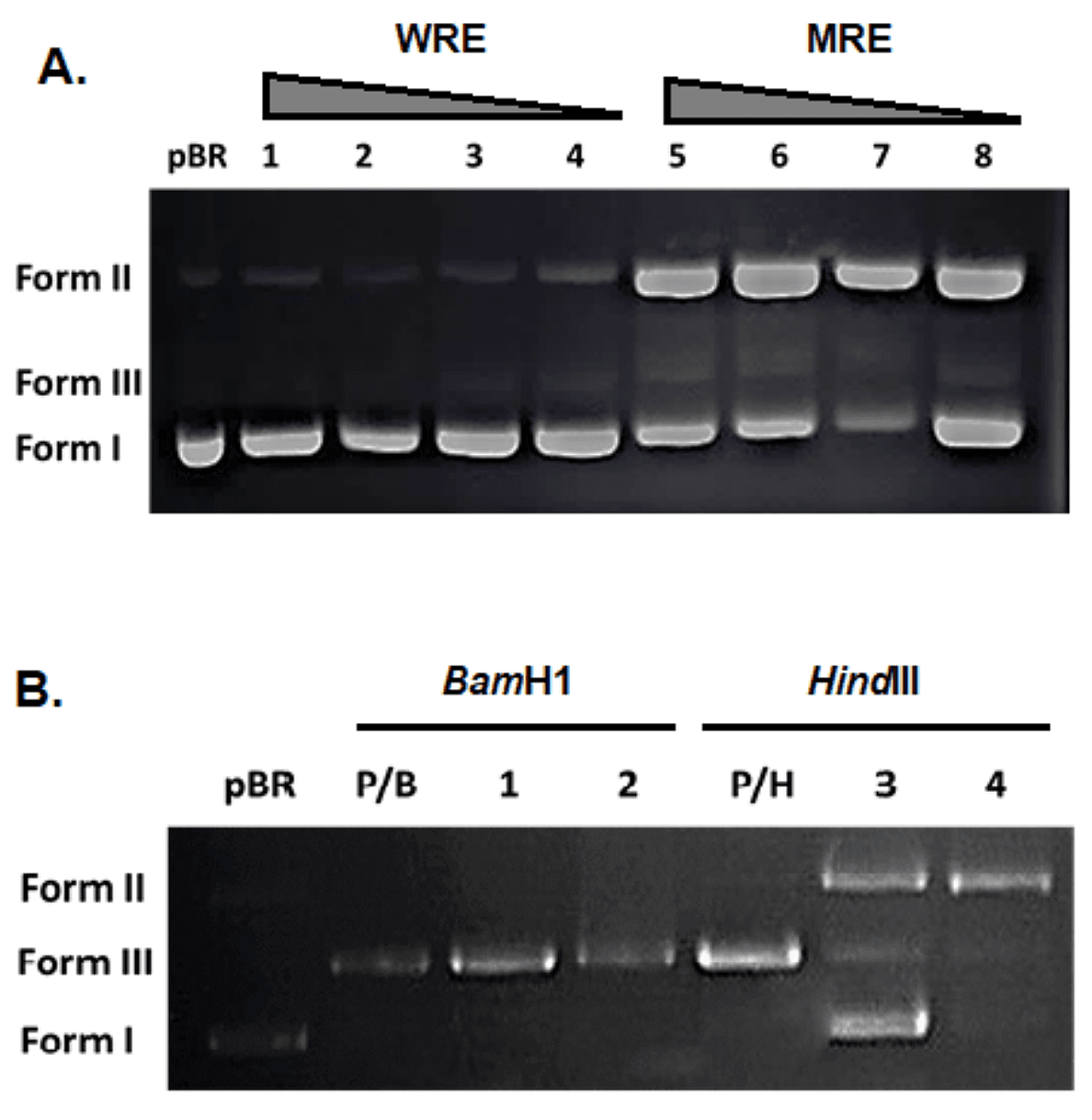
Upon interaction with decreasing concentrations of root extract (1000, 500, 250, 125 μg/ml), the pBR322 plasmid DNA exhibited two distinct DNA bands corresponding to forms I and II, as observed in Figure 3A. This consistent observation was noted in both untreated and treated plasmid DNA samples. As the concentration of the water extract increased, there was a slight decrease in the mobility of the form I band, accompanied by a decrease in the intensity of form II for WRE. In contrast, plasmid DNA treated with MRE showed an increase in the density of form II DNA, coupled with a decrease in form I density, suggesting a transition from the negatively supercoiled DNA conformation (form I) to the relaxed circular form (form II) of DNA.
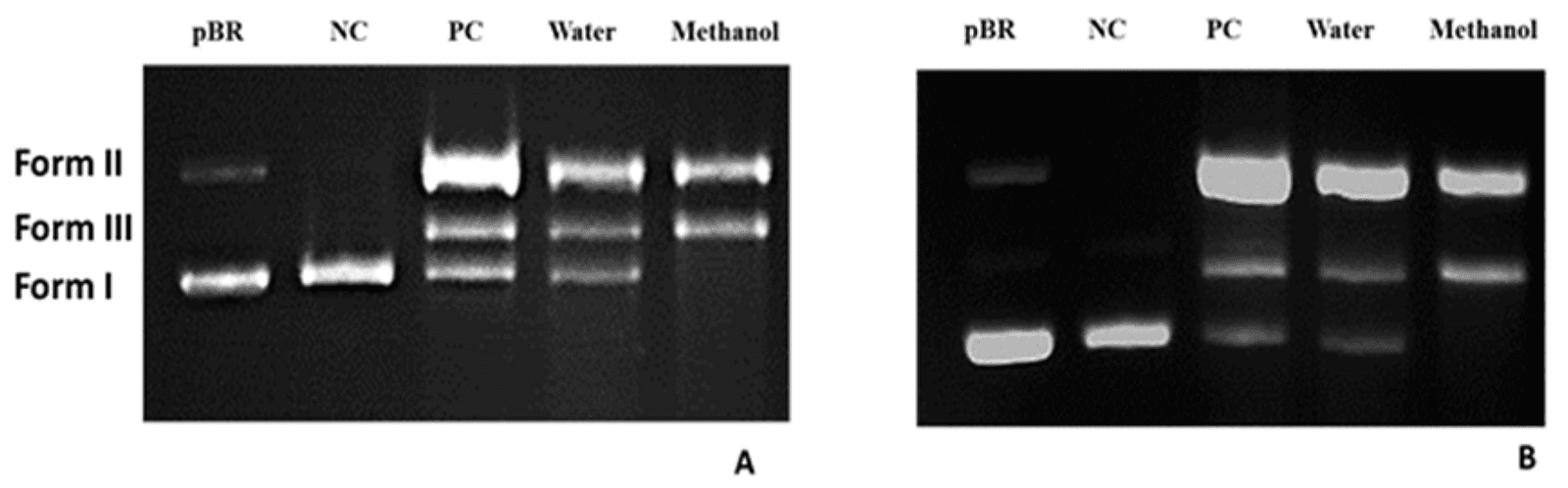
The electropherograms of plasmid DNA treated with the extract for 24 hours at 37°C, followed by BamHI and HindIII digestions, are depicted in Figure 3B. These results were analyzed and presented to gain further insights into DNA verification changes. Additionally, the agarose gel electrophoretic pattern of DNA with and without the extract is illustrated in Figure 4. Untreated plasmid DNA displayed a sharp, intense form I band and a lighter form II band on agarose gel electrophoresis (Lane 1). Furthermore, upon exposure to UV in the presence of H2O2 without the extract, the DNA exhibited a linear band in the III DNA form (Lane PC). Interestingly, in the lanes corresponding to the addition of WRE and MRE to DNA exposed to H2O2 in the presence of UV ("water and methanol"), especially for the methanol extract, it was observed that negatively supercoiled DNA suffered more damage.
Figure 3. Electrophoretograms showing the effects of R. canina root extracts on DNA interaction and restriction digestion. Note: (A) Electrophoretogram showing the interactions of extracts with pBR322 plasmid DNA incubated with varying concentrations of WRE and MRE of R. canina. Lane pBR: untreated plasmid DNA (control), lane 1-4: WRE treatment; lane 5-8: MRE treatment. The concentration for both extracts corresponds (from left to right) 1000, 500, 250,125 μg/ml of the extract, respectively. (B) Electrophoretogram showing the effects of R.canina root extracts on BamH1 and HindIII restriction digestion. pBR322 plasmid DNA incubated with WRE and MRE of R. canina, and, subsequantialy with BamHI and HindIII restriction endonucleases. Lanes; pBR: only pBR322 plasmid DNA (negative control), lane P/B and P/H: pBR322 treated with BamHI and HindIII, respectively (positive control). lanes 1, 2: pBR322 treated with WRE and MRE followed by BamH1 digestion, lanes 3-4: pBR322 treated with WRE and MRE followed by HindIII digestion.
Figure 4. Electrophoretogram of plasmid DNA after ultraviolet photolysis of H2O2 in the presence and absence of the plant WRE and MRE. Note: pBR = untreated plasmid DNA, PC = a mixture of extract and fenton treated plasmid DNA, Water = WRE treated DNA, Methanol = MRE treated DNA. Incubation time is 90 min for (A) and 120 min for (B).
Rat Blood Glucose Levels and Body Weights
The average values of fasting blood glucose levels and body weight were measured before STZ application, 5 days after STZ induction, and before sacrifice (on the 15th day of the extract application). The results are presented in Tables 4 and 5. In the HDWE group, a decrease in blood glucose levels was compared to the previous blood glucose measurement. Although there was an increase in blood sugar levels in other groups, this increase was less pronounced compared to the DC group. For instance, in the LDWE group, the ratio of blood sugar on the 5th day after STZ/scarification to pre-application was 1.06, while in the DC group, this ratio was determined as 1.5. The body weight of the rats in LDME group slightly decreased compared to previous measurements (Table 5).
Table 4. Blood glucose levels of study groups.
Group
Before STZ
administration (mg/dl)
5 days after
STZ administration (mg/dl)
Before
sacrification (mg/dl)
HC
97.28 ± 4.95
98.75 ± 4.25
97.35 ± 4.85
DC
87.28 ± 7.06
398 ± 6.92
596.33 ± 3.51
LDME-treated
87.85 ±7.40
412 ± 15.87
467 ± 10.81
HDME- treated
89.28 ± 12.56
373.66 ± 11.5
532.66 ± 14.36
LDWE- treated
91.14 ± 7.35
556 ± 7.07
593.85 ± 12.41
HDWE- treated
89.14 ± 8.47
500.25 ± 14.26
234.66 ± 15.04
Note: Mean±SD values of each group (n=7) represented (HC = Healthy control; DC = Diabetic control; LDME = Low-dose methanol extract, HDME = High dose methanol extract; LDWE = Low dose water extract, HDWE = High dose water extract).
Table 5. Mean body weight of study groups.
Group
Before STZ administration (g)
5 days after STZ administration (g)
15th day of extract application (g)
HC
268.33 ± 7.37
318 ± 11.97
362.27 ± 11.01
DC
250.75 ± 13.81
276.75 ± 10.43
284.66± 11.93
LDME-treated
248.5 ± 8.52
282.8 ± 7.98
260.53 ± 8.20
HDME-
treated
245 ± 12.61
270 ± 4.58
275.2 ± 3.74
LDWE-
treated
248.71 ± 12.69
279.25 ± 8.92
263.76 ± 7.12
HDWE-
treated
258.28 ± 10.57
266.28 ± 11.78
287.5 ± 12.02
TNF-α and IL-1β expression
levels
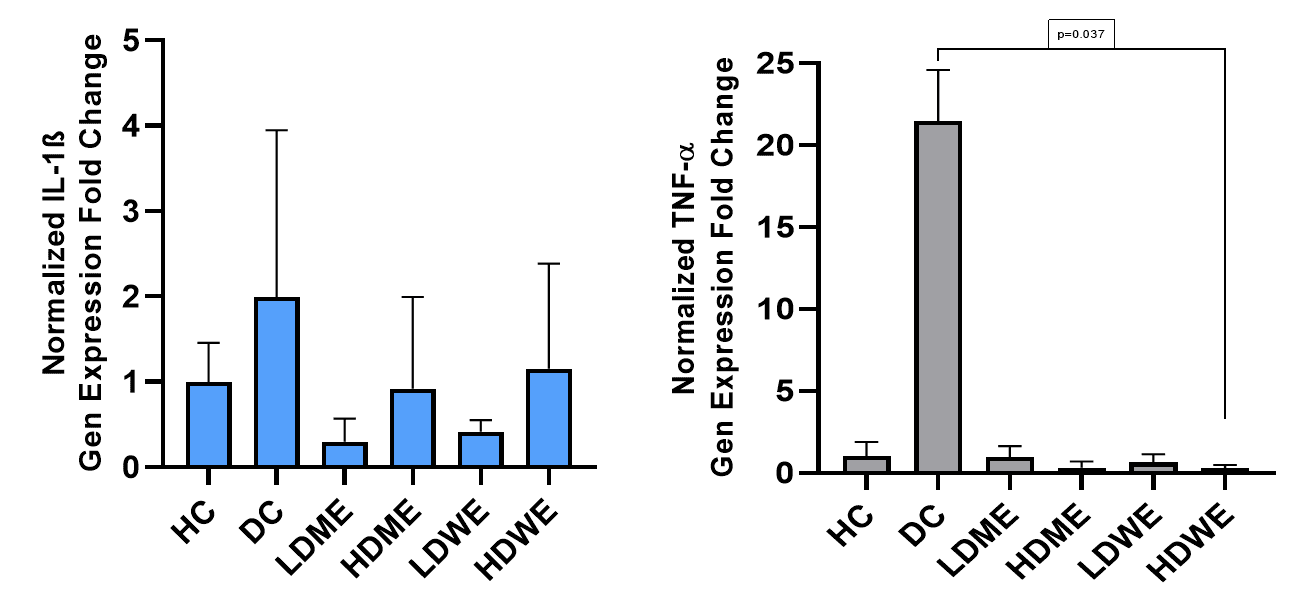
Data from healthy, diabetic, and REtreated groups (Figure 5) show that R. canina root extract reduced TNF-α and IL-1β gene expression in diabetic rats. The most significant decrease was observed between the REtreated and diabetic control groups.
Figure 5. TNF-α and IL-1β gene expression levels between groups. Note: For evaluation of the expression levels of the genes, the 2−ΔΔCt method was used after normalization of expression levels against β-actin mRNA level.
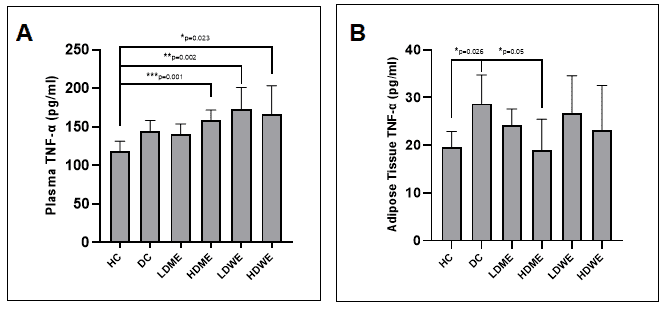
Figure 6. The graphic presenting the effect of R.canina root extracts on the plasma (A) and adipose tissue (B) TNF-ɑ levels in diabetes induced rats. Note: HC = Healthy control; DC = Diabetic control; LDME = Low-dose methanol extract, HDME = High dose methanol extract; LDWE = Low dose water extract; HDWE = High dose water extract-treated animals.
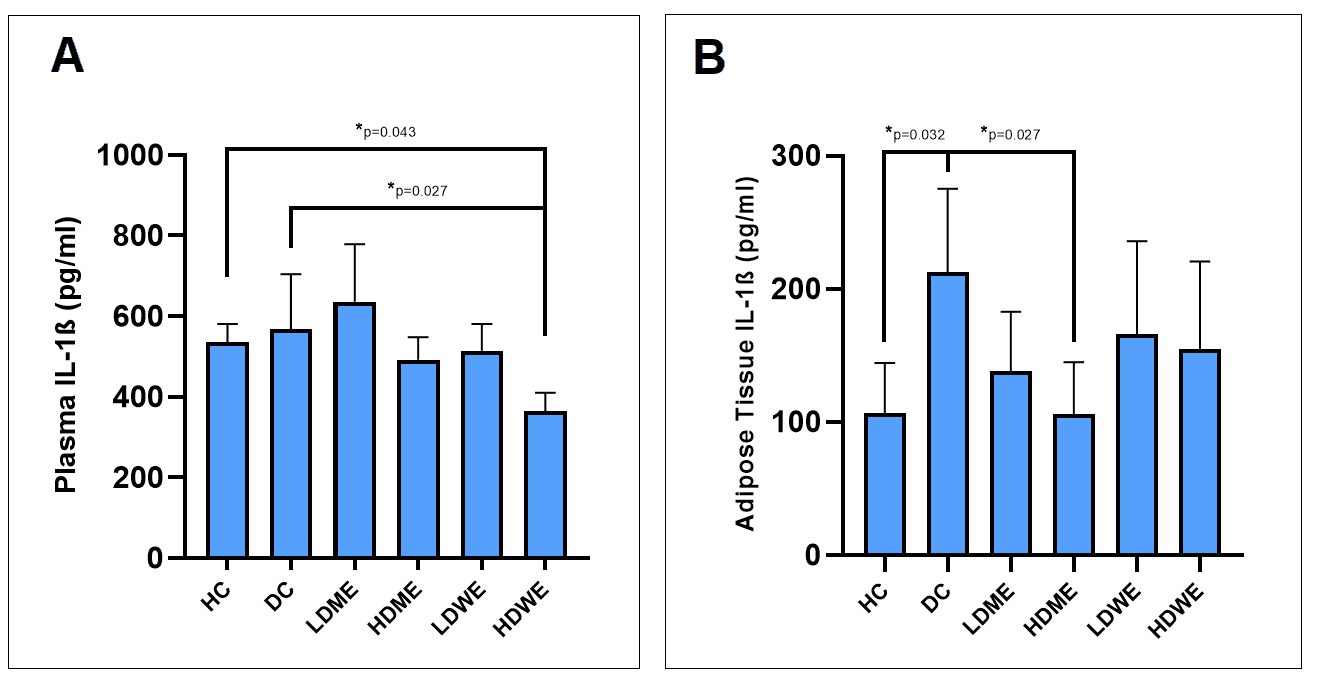
Figure 7. The graphic presenting the effect of R.canina root extracts on the plasma (A) and adipose tissue (B) IL-1β levels in diabetes induced rats. Note: HC = Healthy control; DC = Diabetic control; LDME = Low-dose methanol extract, HDME = High dose methanol extract; LDWE = Low dose water extract; HDWE = High dose water extract-treated animals.
Serum TNF-α and IL-1β Levels
The
graphical presentations and mean values ± SD obtained from ELISA for TNF-ɑ are
provided in Figure 6 and Table 6, respectively. When examining plasma levels of
TNF-ɑ, no statistically significant difference was found between the diabetic
control group and the extract-treated groups. However, a statistically
significant decrease in TNF-alpha levels in adipose tissues was observed
between the HDME-treated group and the diabetic control (Figure 6). On the
other hand, graphical presentations, and mean values ± SD obtained from ELISA
for IL-1β are presented in Figure 7 and Table 7, respectively. Plasma IL-1β
levels were found to be significantly lower in the HDWE group compared to the
Diabetic Control (Figure 7A). Similarly, in adipose tissue, IL-1β levels were
significantly lower in diabetic animals treated with HDME compared to the
Diabetic Control group (Figure 7B).
Table 6. The effect of R.canina root extracts on the plasma and adipose tissue TNF-ɑ levels in diabetes induced rats (pg/ml).
Study group
TNF-ɑ in Plasma
(pg/ml)
TNF-ɑ in Fat tissue
(pg/ml)
Healthy control
119.05±12.53
19.57±3.34
Diabetic control
145.20±13.21
28.71±6.03
LDME-Low-dose
methanol extract treated
140.38±13.62
24.17±3.45
HDME-High-dose
methanol extract treated
158.58±13.32
18.93±6.53
LDWE-Low-dose
water extract treated
173.34±27.91
26.75±7.83
HDWE-High-dose
water extract treated
167.22±36.39
23.20±9.36
Note: Each group contains 7 animals. Experiments performed at least triplicate and mean values±SD were presented.
In Silico Analysis
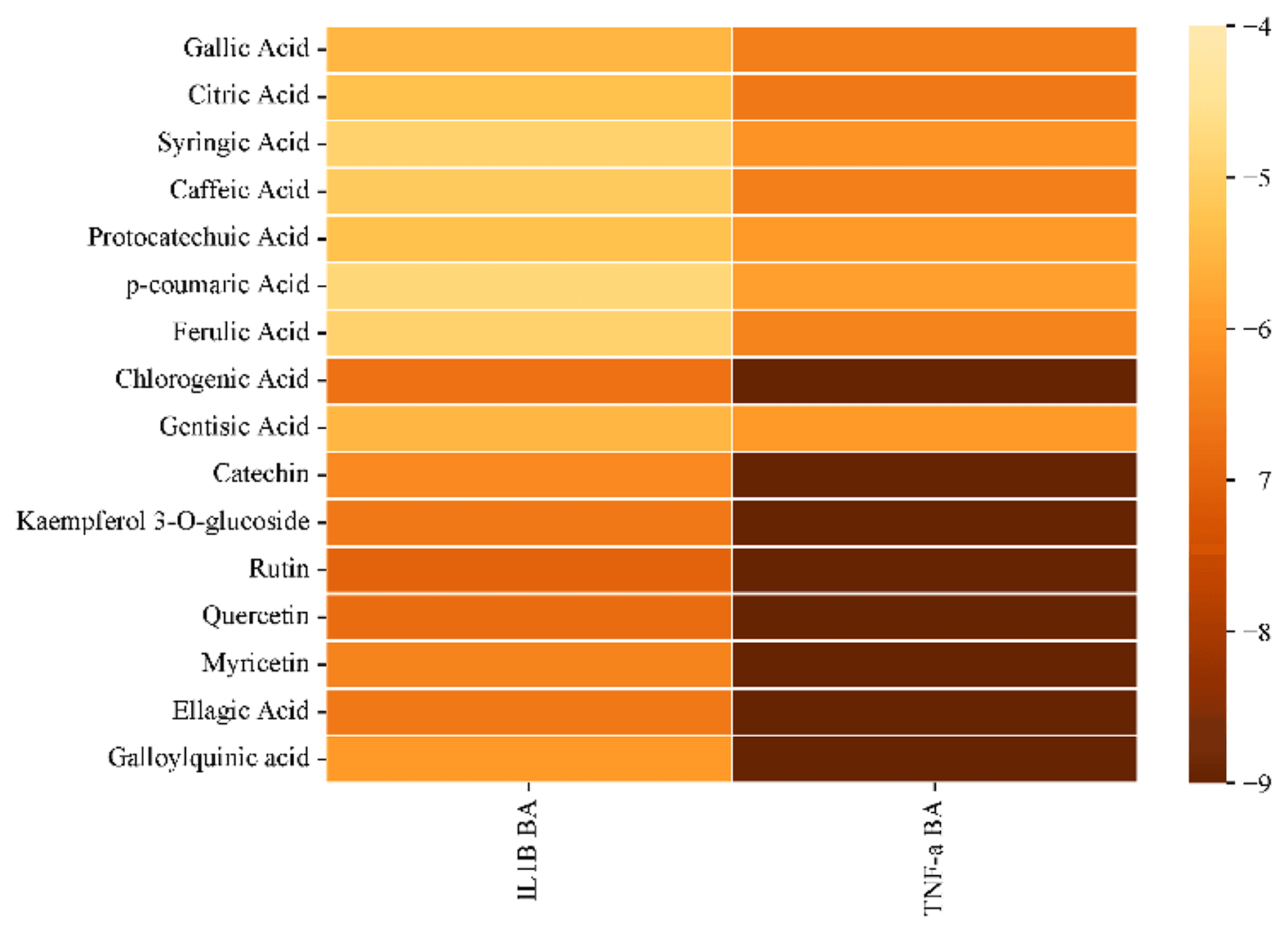
The initial step in exploring inhibitor activity for antidiabetic effects involves analyzing ligands targeting specific proteins. In this study, ligands derived from bioactive components of R. canina were investigated for their inhibitory behaviors against TNF-α and IL-1β proteins, both in vitro and in vivo. The results revealed remarkably high inhibitory activity against TNF-α, particularly with Kaempferol 3-O-glucoside exhibiting the highest binding score of -9.8. For IL-1β, Rutin showed the highest binding score of 7.
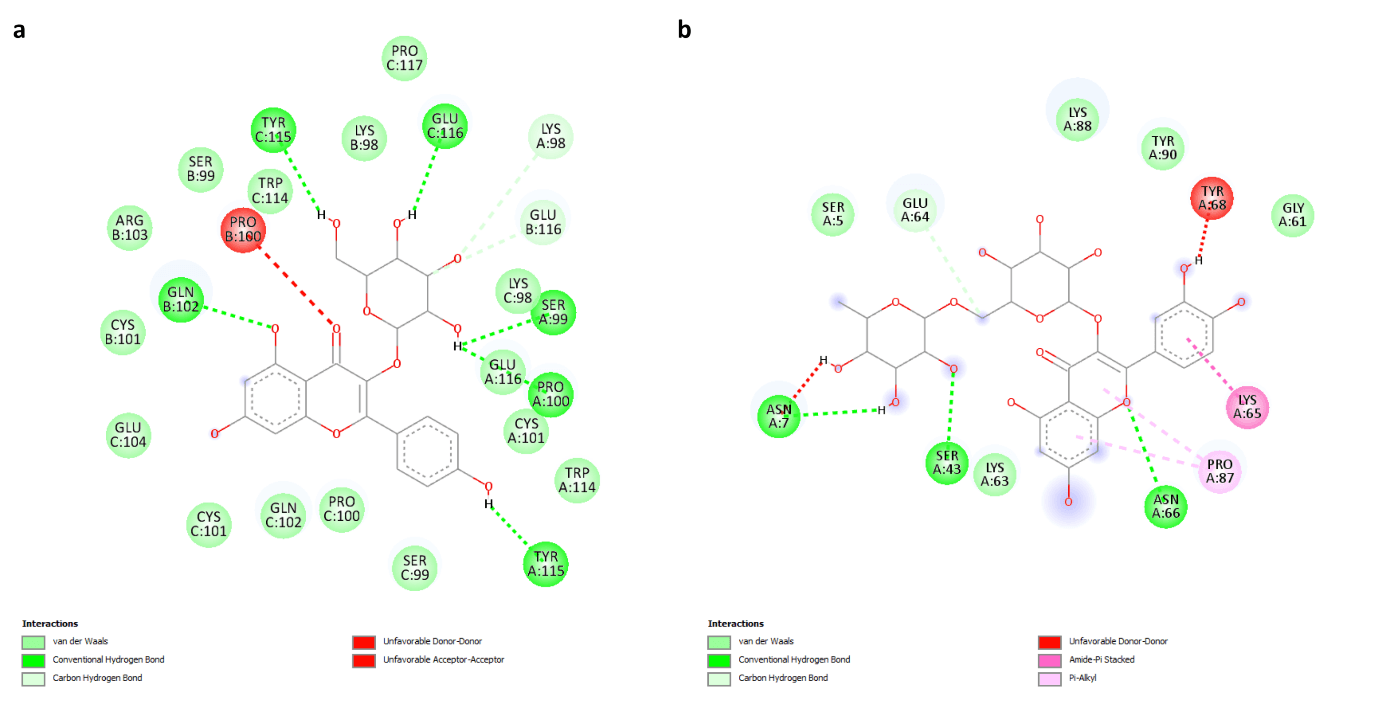
A heatmap was plotted using an online platform for data analysis and visualization. Upon examining detailed docking analysis results, interactions were observed: Kaempferol 3-O-glucoside/TNF-α showed 6 conventional hydrogen bonds, 17 Van der Waals interactions, and 1 unfavorable hydrogen bond (Figure 9a). On the other hand, Rutin/IL-1β showed 3 conventional hydrogen bonds, 2 unfavorable hydrogen bonds, 5 Van der Waals interactions, 1 carbon-hydrogen bond, 1 amide-pi stacked interaction, and 2 different pi-alkyl interactions with the same residue (Figure 9b).
Figure 8. Clustered hierarchical heatmap showing quantified compounds from R. canina.
Figure 9. Two dimensional binding geometry of Kaempferol 3-O-glucoside (a) and Rutin (b).
With
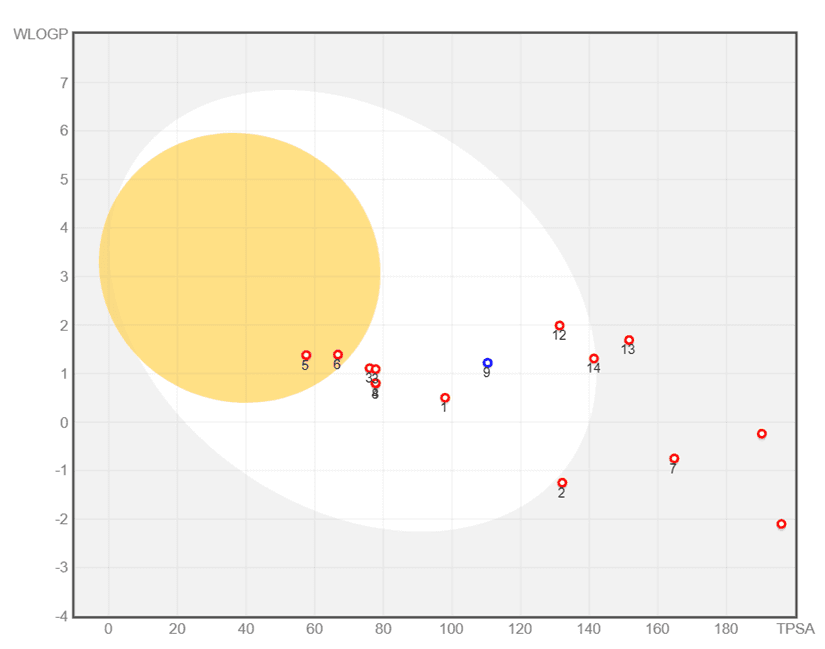
the help of the SwissADME platform and the BOILED-Egg approach (Figure 10), the
absorption parameters of R. canina phenolic compounds (Table 7) had been
investigated. The presence of compounds in the same egg yolk or white means
that these compounds may have similar/common metabolic properties. This is a
statement that they undergo similar metabolic transformations in the body.
Regarding ADMET modeling, the term "PGP" commonly refers P-glycoprotein, and it is a membrane carrier protein significantly influences the absorption and distribution of drugs within the body. As seen in Figure 10 circles around the numbers indicate P-glycoprotein substrates and unlike other bioactive components, Gentisic Acid is identified as a substrate for P-glycoprotein. Also, Kaempferol 3-O-glucoside was found to be out of the model range. The ADMET properties of Kaempferol 3-O-glucoside and Rutin were thoroughly assessed through comprehensive in silico analyses (Table 8). Notably, the results of ADMET tables revealed promising characteristics for these compounds. Both Kaempferol 3-O-glucoside and Rutin demonstrated high inhibitory activity against TNF-alpha, suggesting their potential utility in mitigating inflammatory processes.
Table 7. List table of the phenolic compounds whose ADMET properties were predicted.
Figure 10. The BOILED-Egg model for monitoring phenolic chemicals. Note: Bioactive compounds are numbered in the order given in the Table 7.
Furthermore, their ADMET profiles indicated favorable attributes, implying good absorption, distribution, metabolism, excretion, and toxicity properties. These findings underscore the potential of Kaempferol 3-O-glucoside and Rutin as promising candidates for further investigation as drug molecules in the context of relevant disease processes.
The
ADMET properties of Kaempferol 3-O-glucoside and Rutin were thoroughly assessed
through comprehensive in silico analyses (Table 8). Notably, the results
of ADMET tables revealed promising characteristics for these compounds. Both
Kaempferol 3-O-glucoside and Rutin demonstrated high inhibitory activity
against TNF-alpha, suggesting their potential utility in mitigating
inflammatory processes. Furthermore, their ADMET profiles indicated favorable
attributes, implying good absorption, distribution, metabolism, excretion, and
toxicity properties. These findings underscore the potential of Kaempferol
3-O-glucoside and Rutin as promising candidates for further investigation as
drug molecules in the context of relevant disease processes.
Discussion
Based on our results, the DPPH activity of the water root extract was higher than that of the control and methanol extracts, whereas the DPPH activity of the methanol root extract was higher than that of the control. We found that the water root extract had higher iron chelating activity and phenolic content than the methanol extract. The phenolic content of R. canina root extract was higher than that of other Rosa species (28). While previous research has shown that plant leaves, seeds, and fruit have antioxidant properties, this study suggests that plant roots also have high antioxidant properties. We showed that the antioxidant potential of R. canina extracts was higher than that of BHT, which revealed the high antioxidant potential of root extracts. All studies examining the qualitative and quantitative amounts of phenolic compounds in R. canina fruits found comparable results (29).
Although there are not many studies on the polyphenolic composition of root extract in the literature, according to the findings, R. canina fruits from Türkiye showed some phenolic composition similarities with samples taken from Norway, Poland, and Serbia (30). The phenolic acid levels determined in this study are consistent with the findings of Fecka (2009), who assessed the quantities of gallic acid, protocatechuic acid, vanillic acid, chlorogenic acid, p-coumaric acid, ferulic acid, and t-cinnamic acid by HPLC in rose hips (31). Interestingly, R. canina contains the flavonoid tiliroside (kaempferol 3-O-β-d-(6-pcoumaryl)-glycopyranoside), which inhibits the oxidation of human LDL in vitro and has been shown to possess significant antiobesity, antioxidant, cytotoxic, and anti-complement properties in humans. Our study provides the first evidence for the presence of galloylquinic acid in R. canina roots. Galloylquinic acid has protective activity against free radical-induced damage (32). The largest concentrations of phenolic compounds in WRE were found in myricetin (3.26 mg/100g dw) and catechin (2,453.26 mg/100g dw). Galloylquinic acid was found in the methanol extract (5.43 mg/100g dw), which was not reported elsewhere for R. canina. The phenolic content of this plant may be linked to its high antioxidant potential (33).
Our in vitro results show that the untreated plasmid underwent digestion with BamHI and HindIII enzymes, resulting in the sole observation of a band corresponding to form III. Conversely, when plasmid DNA treated with R. canina’s water extract (WRE) and methanol-rich extract (MRE) was subjected to BamHI digestion, a singular linear band emerged, indicative of enzymatic DNA cleavage. Notably, in the HindIII digestion of WRE- and MRE-treated samples, lanes 3 and 4 exhibited three distinct bands denoting forms I, II, and III, implying a state of partial DNA digestion (Figure 2B). In the context of HindIII digestion within the specific A/A region, it was determined that plasmid digestion interacting with the extract is impeded by the extract. The primary interaction of the extract with DNA, leading to the formation of interstrand adducts, could result in conformational changes in the plasmid DNA structure. Consequently, the HindIII restriction enzyme failed to recognize the specific A/A region. These findings confirm that the methanol-rich extract (MRE) does not preserve DNA integrity. In addition, it was determined that the roots of R. canina exhibit a UV-protective effect even at a moderate concentration (1/10 dilution).
Furthermore, considering the data obtained from in
vivo experiments, it has been determined that R.
canina root extracts exhibit promising potential in
reducing elevated blood glucose levels and body mass
in diabetic rats. This discovery unveils a new
perspective on its potential against obesity. The groups
treated with the extract demonstrated significantly
lower blood glucose levels compared to the control
group. Given the known antidiabetic properties of the
species' fruits and fruit seeds, it is plausible to assert
that R. canina possesses a synergistic antidiabetic
effect throughout the entire plant (34).
Table 8. Theoretical ADMET properties of Kaempferol 3-O-glucoside and Rutin.
ADMET
Properties
Kaempferol
3-O-glucoside
Rutin
Ideal
Range
Physicochemical
Properties
Molecular Weight
(g/mol)
448.38
610.52
(50.0/500.0)
Fraction Csp3
0.29
0.44
(≥0.25)
Num. Rotatable
Bonds
4
6
(1.0/10.0)
Num. H-bond Acceptors
11
16
(2.0/20.0)
Num. H-bond Donors
7
10
(0.0/6.0)
TPSA Ų
190.28
269.43
(≤140.0)
Pharmacological
Properties
Consensus Log Po/w
-0.25
-1.29
(≥1.0, ≤4.0)
log S (Water
Solubility)
-3.18
-3.3
(-6.5/0.5)
Solubility Class
Soluble
Soluble
Soluble
GI Absorption
Low
Low
-
BBB Permeant
No
No
No
P-gp Substrate
No
Yes
-
Log Kp (Skin
Permeation cm/s)
-8.52
-10.26
(cm/h Kp)
Lipinski Rule of 5
Violations
2
3
(Max. 4)
Bioavailability
Score
0.17
0.17
(≥0.10)
Furthermore,
considering the data obtained from in vivo experiments, it has been
determined that R. canina root extracts exhibit promising potential in
reducing elevated blood glucose levels and body mass in diabetic rats. This
discovery unveils a new perspective on its potential against obesity. The
groups treated with the extract demonstrated significantly lower blood glucose
levels compared to the control group. Given the known antidiabetic properties
of the species' fruits and fruit seeds, it is plausible to assert that R.
canina possesses a synergistic antidiabetic effect throughout the entire
plant (34).
From
the pathogenicity of the disease, considering the known association of the
inflammatory phenotype with diabetes, an increase in the expression of
proinflammatory cytokines has been observed in diabetic patients (35). So, in this study, the levels of TNF-a
and IL-1β were examined. It is well-established that TNF-a, released in
adipocytes, restricts insulin response within the cell by promoting the
phosphorylation of IRS-1. The elevated levels of TNF-a disrupt insulin
signaling through serine phosphorylation, contributing to insulin resistance in
adipocytes and peripheral tissues, ultimately leading to the development of
Type 2 Diabetes Mellitus (T2DM) (36).
Additionally, it has been observed that elevated blood glucose levels increase
the production of IL-1β in pancreatic cells (37).
Based on these information’s, it was observed that the root extract of R.
canina reduced the expression of TNF-a and IL-1β genes in diabetic rats. The
research demonstrates a decrease in the elevated levels of the proinflammatory
cytokine TNF-α by both water and methanol root extracts. This aligns with the in
silico results, supporting the emergence of high scores in the analysis of
TNF-α. It is plausible to assert that the phenolic components present in the
root exhibit a synergistic anti-inflammatory effect, thereby reducing sugar
levels in rats. Hence, the bioactive composition of the plant manifests both
antidiabetic and anti-inflammatory effects. Regarding inflammatory parameters,
oral supplementation with LDWE and HDWE resulted in a significant reduction in
serum TNF-a and IL-1 beta levels in diabetic rats when compared to untreated
diabetic rats (TNF-a: 1.64, 0.83, and IL-1β: 0.48, 2.04, respectively). This
reduction was noteworthy compared to the diabetic control group (TNF-α: 42.26,
and IL-1β: 4.34).
However, the difference in serum TNF-a and IL-1 beta levels
between high and low doses of methanol and water extracts was not statistically
significant. This suggests an extract-independent effect, highlighting that the
extracts exert an effect irrespective of concentration. The results obtained from in silico analyses
indicate that the kaempferol 3-O-glucoside compound present in the plant
extract is effective in inhibiting TNF-α, and the inhibitory mechanism occurs
through a highly potent binding activity. Additionally, rutin exhibited the
highest activity for IL-1β. Considering that both bioactive components are
found in methanolic extracts and the significant reduction in inflammatory
expressions in methanolic extracts by in vivo experiments, it can be said that
methanolic extracts of R. canina are more effective both in vivo and in
silico in terms of their antidiabetic activity, and the contribution of these
two compounds to this effect is considerable.
After
predicting the ADMET properties of compounds exhibiting high activity, optimal
resolution, non-toxic, and non-carcinogenic activities were determined. Based
on these findings, it is possible to assert that compounds demonstrating high
anti-inflammatory activity in the root extract of the plant are potential drug
candidates with high druggability (38).
Conclusion
Inflammation
associated with IL-6 and TNF-α has been reported as a critical factor in
diabetes literature. The root extract of R. canina is a promising
candidate for an anti-inflammatory agent based on its impact on cytokine levels
and biological activity. The results obtained from
conducted in vivo and in silico analyses revealed that the compounds kaempferol
3-O-glucoside and rutin present in R. canina methanol extracts (at
concentrations of 119.85 and 25.72 mg.100-1 dw, respectively) exhibit strong
inhibitory and suppressive effects on inflammatory cytokines to a significant
extent. Furthermore, the examined ADMET properties highlight the pharmaceutical
suitability of these two compounds. Further in vitro and in
vivo studies are needed to elucidate the properties of the root extract and
its potential benefits in diabetes treatment.
The ethnopharmacological significance of Rosa canina, or dog rose, transcends diverse cultures, with traditional applications in treating various diseases. This study investigates the potential pharmacological application of Rosa canina for diabetes treatment, aiming to assess its antidiabetic properties through in vitro, in vivo, and in silico analyses targeting pro-cytokines. Biochemical profiling utilizing HPLC, and phenolic content analyses were conducted to reveal the antioxidant properties of Rosa canina. In diabetic rats, root extracts influenced the expression of TNF-α and IL-1β, with an exploration of DNA-binding and protective activities. DPPH scavenging and iron chelating activities were measured, identifying significant IC50 values. The chromatographic analysis identified various compounds, with Kaempferol 3-O-glucoside and Rutin exhibiting high inhibitory activity against TNF-alpha. In silico analyses highlighted inhibitory activities by molecular docking against TNF-α and IL-1β (PDB IDs 2AZ5 and 9ILB, respectively) and their drug potential based on ADMET properties. The obtained results have demonstrated a significant decrease in blood glucose levels in mice through the reduction of TNF-α and IL-1β mediated diabetic processes, facilitated by the Rosa canina extract. In conclusion, this study exploring the effects of Rosa canina extracts on diabetic rats have provided valuable insights into its potential therapeutic benefits. The observed reductions in blood glucose levels, improvements in lipid profiles, and modulation of antioxidant activity highlight its promising role in managing diabetes-related complications. Further research is warranted to elucidate the underlying mechanisms and optimize the dosage regimens for harnessing the full therapeutic potential of Rosa canina extracts in diabetes management.
Care ADAJD. Standards of medical care in diabetes—2009.
2009;32(Suppl 1):S13.
Dal Canto E, Ceriello A, Rydén L, Ferrini M, Hansen TB,
Schnell O, et al. Diabetes as a cardiovascular risk factor: An overview of
global trends of macro and micro vascular complications.
2019;26(2_suppl):25-32.
Harding JL, Pavkov ME, Magliano DJ, Shaw JE, Gregg EWJD.
Global trends in diabetes complications: a review of current evidence.
2019;62:3-16.
Rao V, Rao LV, Tan SH, Candasamy M, Bhattamisra SKJD,
Research MSC, et al. Diabetic nephropathy: an update on pathogenesis and drug
development. 2019;13(1):754-62.
Fakhruddin S, Alanazi W, Jackson KEJJodr. Diabetes-induced
reactive oxygen species: mechanism of their generation and role in renal
injury. 2017;2017.
Hildebrandt X, Ibrahim M, Peltzer NJCD, Differentiation.
Cell death and inflammation during obesity:“Know my methods, WAT (son)”.
2023;30(2):279-92.
Swaroop JJ, Rajarajeswari D, Naidu JJTIjomr. Association of
TNF-α with insulin resistance in type 2 diabetes mellitus. 2012;135(1):127.
Sun Q, Li J, Gao FJWjod. New insights into insulin: The
anti-inflammatory effect and its clinical relevance. 2014;5(2):89.
Qiao Y-c, Shen J, He L, Hong X-z, Tian F, Pan Y-h, et al.
Changes of regulatory T cells and of proinflammatory and immunosuppressive
cytokines in patients with type 2 diabetes mellitus: a systematic review and
meta-analysis. 2016;2016.
Esser N, Legrand-Poels S, Piette J, Scheen AJ, Paquot NJDr,
practice c. Inflammation as a link between obesity, metabolic syndrome and type
2 diabetes. 2014;105(2):141-50.
Akash MSH, Rehman K, Liaqat AJJocb. Tumor necrosis
factor‐alpha: role in development of insulin resistance and pathogenesis of
type 2 diabetes mellitus. 2018;119(1):105-10.
Wang T-y, Wang W, Li F-f, Chen Y-c, Jiang D, Chen Y-d, et
al. Maggot excretions/secretions promote diabetic wound angiogenesis via
miR18a/19a – TSP-1 axis. Diabetes Research and Clinical Practice.
2020;165:108140.
Demir F, Özcan MJJofe. Chemical and technological properties
of rose (Rosa canina L.) fruits grown wild in Turkey. 2001;47(4):333-6.
Doğan
ŞJMFD. XIV.-XV. yüzyıl Türkçe tıp metinlerinde halk hekimliği izleri. 2011.
Khazaei M, Khazaei M, Pazhouhi MJW. An overview of
therapeutic potentials of Rosa canina: A traditionally valuable herb.
2020;7:e1580.
Demir N, Yildiz O, Alpaslan M, Hayaloglu AJL-fs, technology.
Evaluation of volatiles, phenolic compounds and antioxidant activities of rose
hip (Rosa L.) fruits in Turkey. 2014;57(1):126-33.
Moustafa EM, Araby E, Elbahkery ALJEJoRS, Applications.
Assessing the Antimicrobial, Antioxidant and Anti-inflammatory Potential of
Ethanolic Extract of Irradiated Rosa canina L. Fruits. 2021;34(1):27-43.
Schaich
KM, Tian X, Xie JJJoff. Hurdles and pitfalls in measuring antioxidant efficacy:
A critical evaluation of ABTS, DPPH, and ORAC assays. 2015;14:111-25.
Adjimani
JP, Asare PJTr. Antioxidant and free radical scavenging activity of iron
chelators. 2015;2:721-8.
Ouerghemmi
S, Sebei H, Siracusa L, Ruberto G, Saija A, Cimino F, et al. Comparative study
of phenolic composition and antioxidant activity of leaf extracts from three
wild Rosa species grown in different Tunisia regions. Industrial Crops and
Products. 2016;94:167-77.
Oda T,
Yamazumi Y, Hiroko T, Kamiya A, Kiriya S, Suyama S, et al. Mex-3B induces
apoptosis by inhibiting miR-92a access to the Bim-3′ UTR. 2018;37(38):5233-47.
Aydın B, Gönder LY, Çerçi NA, Ateş YC, Yalçınkaya İS,
Canbolat N, et al. Biological activities and DNA interactions of aqueous
extract of Phlomis linearis (Boiss. & Bal.). 2023;3(1):73-85.
Al-Mahmood
S, Razak TA, Abdullah ST, Fatnoon NA NN, Mohamed AH, Al-Ani IMJMJoHR. A
comprehensive study of chronic diabetes complications in streptozotocin-induced
diabetic rat. 2016;20(2):4.
Shah K,
Maghsoudlou PJBjohm. Enzyme-linked immunosorbent assay (ELISA): the basics.
2016;77(7):C98-C101.
Pettersen
EF, Goddard TD, Huang CC, Couch GS, Greenblatt DM, Meng EC, et al. UCSF
Chimera—a visualization system for exploratory research and analysis.
2004;25(13):1605-12.
Tumbas VT, Canadanović-Brunet JM, Cetojević-Simin DD,
Cetković GS, Ethilas SM, Gille L. Effect of rosehip (Rosa canina L.)
phytochemicals on stable free radicals and human cancer cells. Journal of the
science of food and agriculture. 2012;92(6):1273-81.
Zadernowski R, Naczk M, Nowak‐Polakowska HJJotAOCS. Phenolic
acids of borage (Borago officinalis L.) and evening primrose (Oenothera biennis
L.). 2002;79(4):335-8.
Bisla G, Choudhary S, Chaudhary VJTSWJ. Evaluation of the
nutritive and organoleptic values of food products developed by incorporated
Catharanthus roseus (Sadabahar) fresh leaves explore their hypoglycemic
potential. 2014;2014.
Fecka IJPA. Qualitative and quantitative determination of
hydrolysable tannins and other polyphenols in herbal products from meadowsweet
and dog rose. 2009;20(3):177-90.
Moore JP, Westall KL, Ravenscroft N, Farrant JM, Lindsey GG,
Brandt WFJBJ. The predominant polyphenol in the leaves of the resurrection
plant Myrothamnus flabellifolius, 3, 4, 5 tri-O-galloylquinic acid, protects
membranes against desiccation and free radical-induced oxidation.
2005;385(1):301-8.
Al-Rowais NAJSmj. Herbal medicine in the treatment of
diabetes mellitus. 2002;23(11):1327-31.
Ertas B, Hazar-Yavuz AN, Topal F, Keles-Kaya R, Karakus Ö,
Ozcan GS, et al. Rosa canina L. improves learning and memory-associated
cognitive impairment by regulating glucose levels and reducing hippocampal
insulin resistance in high-fat diet/streptozotocin-induced diabetic rats.
2023;313:116541.
Cieślak M, Wojtczak A, Cieślak MJABP. Role of
pro-inflammatory cytokines of pancreatic islets and prospects of elaboration of
new methods for the diabetes treatment. 2015;62(1):15-21.
Li J, Xu J, Qin X, Yang H, Han J, Jia Y, et al. Acute
pancreatic beta cell apoptosis by IL-1β is responsible for postburn
hyperglycemia: Evidence from humans and mice. 2019;1865(2):275-84.
Wang Z, Zhang S, Xiao Y, Zhang W, Wu S, Qin T, et al. NLRP3
Inflammasome and Inflammatory Diseases. Oxidative medicine and cellular
longevity. 2020;2020:4063562.
Riaz A, Rasul A, Hussain G, Zahoor MK, Jabeen F, Subhani Z,
et al. Astragalin: a bioactive phytochemical with potential therapeutic
activities. 2018;2018.