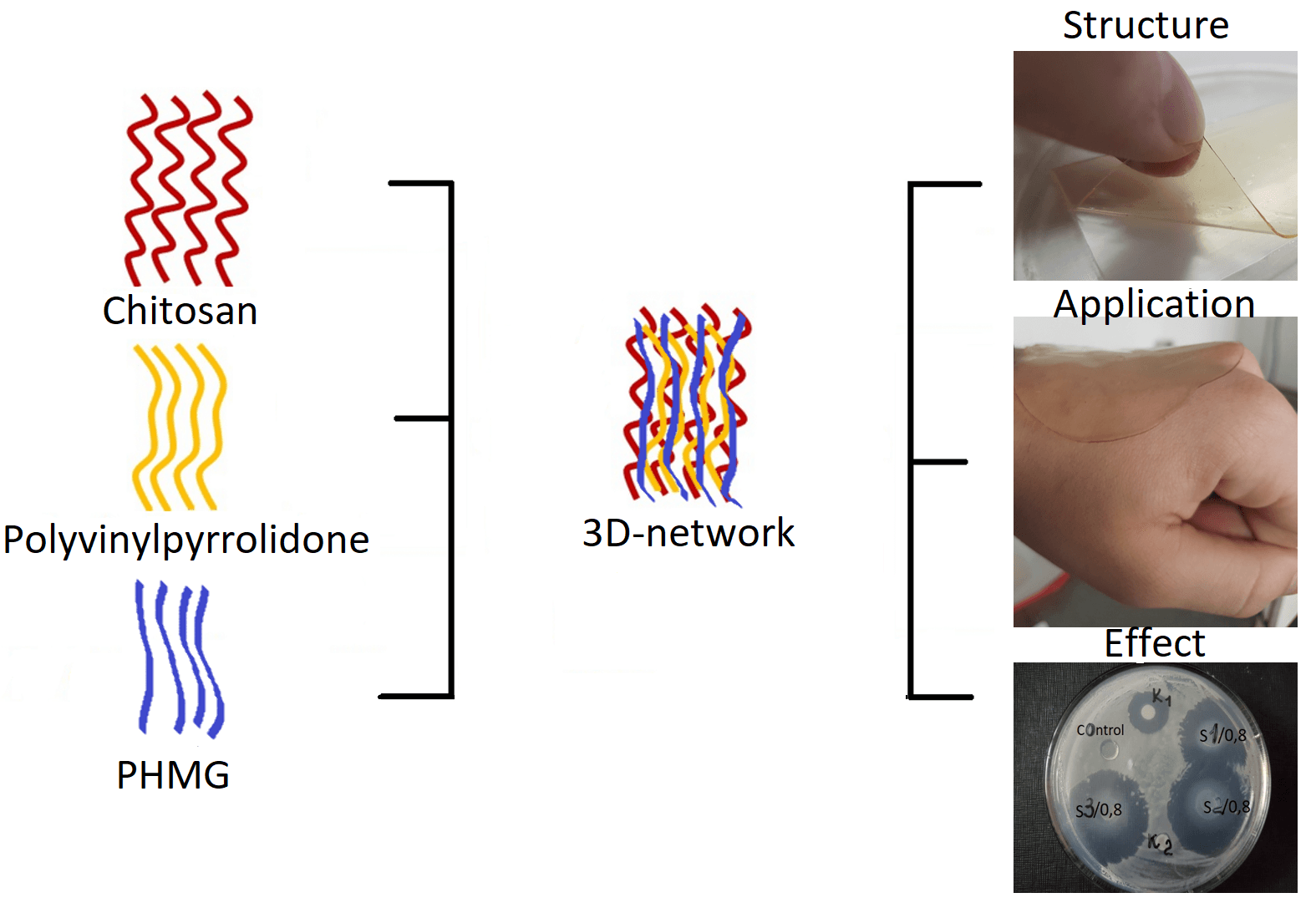
The
development of effective wound dressings remains a pressing issue in modern
medicine. Traditional dressing materials can cover and protect the wound from
infection and promote scab formation. However, they may adhere to the wound
surface and cause secondary mechanical damage. Moreover, they lack
antibacterial properties and do not create a moist environment conducive to
wound healing. As a result, the wound becomes dehydrated, leading to the loss
of biologically active substances, which prolongs the healing process (1-3).
Hydrogel
dressings have garnered significant attention due to their unique properties
that promote optimal wound healing. These dressings provide balanced moisture
retention, exudate absorption, and infection protection, which is especially
important in the treatment of burns, trophic ulcers, diabetic, and
post-traumatic wounds. Most hydrogels are based on the inclusion of synthetic
or natural polymers forming a three-dimensional network containing an aqueous
medium. Among synthetic polymers, poly(meth)acrylates, polyethylene glycols,
poly(vinyl alcohols), poly(vinylpyrrolidones) (PVP), polylactic-co-glycolic
acid, and poly(urethanes) are of great importance. In contrast, natural
polymers are mainly represented by polysaccharides, such as hyaluronic acid,
alginate, or chitosan (CHS), and proteins, such as albumin, collagen, or
elastin. Hydrogels, with their three-dimensional crosslinked network
structures, possess physical and chemical properties similar to human tissues (4, 5).
CHS is a
naturally derived polymer. Due to its biodegradability, non-toxicity, excellent
film-forming ability, and antimicrobial and antifungal activity, CHS-based
materials play an important role in various industries. Despite its numerous
advantages, CHS films also have certain drawbacks, such as low vapor
permeability and poor mechanical and thermal properties. The most effective
method for producing more durable CHS coatings is polymer blending,
particularly with PVP (6, 7).
PVP, in
turn, is a synthetic polymer known for its biocompatibility, non-toxicity, and
hydrophilic properties. It is widely used in controlled drug release, wound
dressings, and tissue engineering. Additionally, PVP is a water-soluble polymer
that positively impacts absorption, viscosity, solubilization, and condensation
and can form mixtures with CHS. PVP can form hydrogen bonds with CHS through
the interaction between the amino and hydroxyl groups of CHS and the carbonyl
group of PVP. Aldana . reported the fabrication of CHS/genipin/PVP films
for controlled drug release (-).
Declarations
Conflict of Interest
The authors declare no conflicting interest.
Data Availability
The unpublished data is available upon request to the corresponding author.
The use of
polyhexamethylene guanidine hydrochloride (PHMG-H) in such film coatings could
be highly effective, as this polymer is known for its broad-spectrum
antibacterial activity and even regenerative properties. Furthermore, this
agent exhibits fewer side effects on human skin (13, 14). In the literature, there is only
one study mentioning the side effects of topical PHMG-H application, where
sensitization occurred in a patient over 1–2 months of frequent use of a
non-alcoholic disinfectant containing PHMG-H at a concentration of 0.1–1%.
However, it is important to note that the patient had a history of irritant
dermatitis (15). This study aims to develop and
characterize a CHS-based hydrogel dressing by modifying its strength and
antibacterial properties through the incorporation of PVP and PHMG-H.
Experimental Section
Materials
PVP (Weight
Average Molecular Weight: 58 kDa, K-Value Viscosity: 29−32) was supplied by
Ashland, USA. Food-grade water-soluble CHS (deacetylation degree (DD): 75−95%,
average molecular weight: 1.0 – 30.0 kDa, mass fraction of moisture is ~5%.)
was supplied by Bioprogress LLC, Russia. PHMG-H was supplied by Polisept LLC,
Russia. Glycerol (no less than 99%) was supplied by TD Khimmed LLC, Russia.
Glacial acetic acid (no less than 99.8%) was supplied by Component-Reactive
LLC, Russia. Sodium hydroxide (no less than 98.0%) was supplied by CDH, India.
Preparation of hydrogels
Twenty
grams of PVP were dissolved in 200 mL of distilled water with mechanical
stirring at room temperature until the component was fully dissolved. The
solution was then alkalized using a 10% sodium hydroxide solution to a pH of
9.0 ± 0.5, and 20 mL of glycerol was added while stirring. The resulting mixture
was poured into glass containers, sealed with rubber stoppers, crimped with
aluminum caps, and autoclaved in a steam sterilizer for 8 min at a pressure
of 1 kgf/cm² and a temperature of +119.6 °C. In a separate container, 1.0−3.0
g of CHS (depending on the experimental sample) were dissolved in 100 mL of
distilled water with mechanical stirring for 15−20 min at a speed of 430
rpm. Then, while reducing the stirring speed to 170 rpm, 2.1 g of glacial
acetic acid and 0.8 g of PHMG-H were added to the suspension. After
vigorous stirring, the solution was neutralized with alkali to a pH of 6.1, and
stirring was resumed at a speed of 430 rpm for 5−10 min.
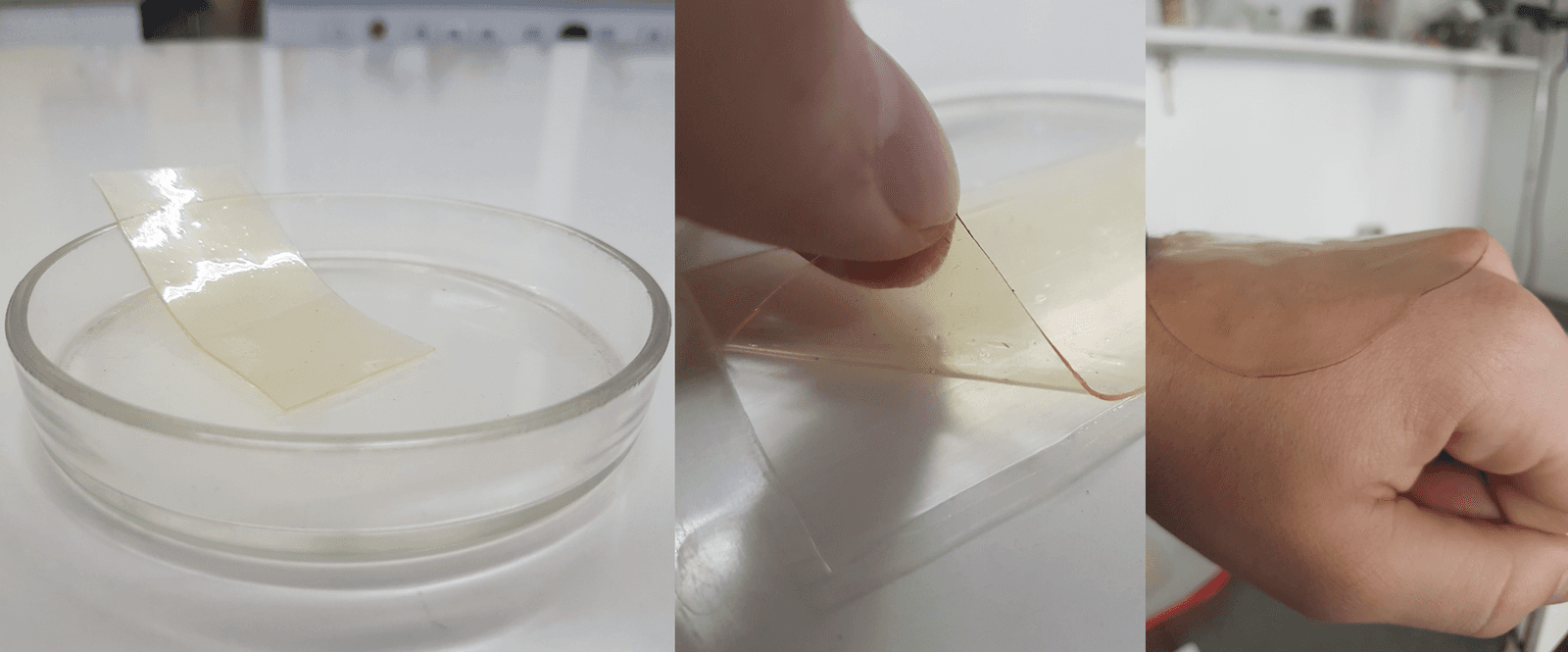
Figure 1. Hydrogels based on CHS/PVP/PHMG-H.
Table 1. Compositions of experimental hydrogel samples.
Sample
Ingredients, Gramm
PVP
Glycerol
CHS
PHMG-H
Acetic acid
Control
10.0
25.2
2.0
-
2.1
S1/0.8
1.0
0.8
S2/0.8
2.0
S3/0.8
3.0
The resulting PVP and CHS/PHMG-H solutions were combined at room temperature and mixed intensively with mechanical stirring until a homogeneous solution was obtained for 10 min at a speed of 430 rpm. The final mixture was alkalized to a pH of 6.2−6.3. The resulting mass was applied to a molding vessel with wall heights of approximately 1.5 mm, with a dense polyethylene film substrate placed in advance and dried for 24 h. The hydrogel formulations are listed in Table 1, with the pure PVP/CHS hydrogel prepared as the control. The overall appearance of the hydrogels is shown in Figure 1.
Characterization of
hydrogels
Differential Scanning
Calorimetry (DSC)
To
determine the glass transition temperature (Tg) of CHS, the analysis was
performed using a universal differential scanning calorimeter NETZSCH DSC 204
F1 Phoenix®, Germany. The samples were scanned from 25℃ to 250℃ at a rate of 10℃/min under a nitrogen atmosphere.
Dynamic Mechanical
Analysis (DMA)
The
analysis was conducted using a dynamic mechanical analyzer NETZSCH DMA 242 C®,
Germany. Film strips with polyethylene backing, measuring 10 x 6 mm and having
a thickness of 0.32 mm (for the sample with 2% CHS concentration) and 0.37 mm
(for the sample with 3% CHS concentration), were prepared as samples for DMA.
The sample S1/0.8 could not be secured in the device’s cuvette due to its low
mechanical strength and, therefore, was not analyzed.
Swelling Behaviors
To assess
the material’s sorption capacity, the swelling of the samples was measured
gravimetrically. Experimental samples, dried to constant weight, with a
diameter of 21 mm and weighing between 0.20 and 0.27 g, were placed in
custom-made aluminum dishes. The dishes were labeled and placed on a perforated
porcelain platform inside a desiccator, where constant air humidity was
maintained due to the presence of water in the lower part of the vessel. The
experiment was considered complete when the weight of the dish with the
material became constant. Two measurements were conducted for each of the four
samples to average the results. Subsequently, the sorption isotherm was
plotted, and the swelling degree of the material was calculated using the
following formula:
α=m0m−m0×100%
Equation 1
Where m
is the mass of the swollen sample and m0 is the initial mass of the sample in
grams.
Water Vapor Transmission
Rates
The method
for determining water vapor permeability involves creating a difference in
water vapor pressure on both sides of the tested sample and measuring the
amount of water vapor passing through a unit area of the sample over a unit of
time. To measure vapor permeability, templates with a diameter of 2.5 cm were
cut from the obtained film material so that the edges of the sample matched the
outer diameter of the gasket. The bottom of a corrosion-resistant beaker was
filled with 25 ± 1 mL of distilled water. A rubber gasket was placed on the
working opening and shoulder of the beaker, on top of which the medical device
sample was laid. The beaker was tightly sealed with a lid to secure the tested sample
(16). The beakers with samples were
weighed on electronic analytical scales. The beakers containing the film
materials were placed in a desiccator, which was then placed in a thermostat
and kept at a temperature of 37 °C for 1 h Upon completion of the
experiment, the masses of the beakers were recorded before and after the thermostat.
The vapor permeability of the samples was then calculated using the following
formula:
μ=(πr2)×τm1−m2
Equation 2
Where m1
is the mass of the weighing bottle before thermosetting, m2
is the mass of the weighing bottle after thermosetting, π is a mathematical
constant, the ratio of the circumference to its diameter (≈ 3.14), r is
the radius of the sample, τ is the time of the experiment.
Antimicrobial testing
The
determination of the antimicrobial activity of the samples was carried out
using the disk diffusion method. For this, the strain of obligate
methylotrophic bacteria Methylophilus
quaylei, under the number MT B-2338T, was used (17). Although Methylophilus quaylei is an obligate methylotrophic bacterium not
associated with human infections, it can form biofilms, making it resistant to
antibiotics. For
example, the Methylophilus
quaylei MT strain was resistant to polymyxin B at a
concentration of 0.01 μg/mL, even though polymyxin B is FDA-approved for
serious infections caused by multidrug-resistant gram-negative bacteria.
Therefore, this
bacterium is suitable for modeling the antimicrobial activity of both CHS and
PHMG-H (18, 19).
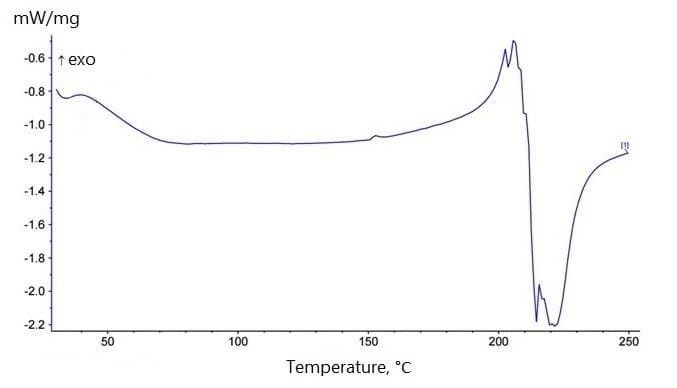
Figure 2. DSC thermogram of CHS used in the formation of hydrogels.
The cultivation conditions used were a solid nutrient mineral medium containing 1% methanol and 1.5% Bactoagar (USA) (20). Twenty microliters of a 24-hour inoculum of Methylophilus quaylei were applied to a 95 mm diameter Petri dish containing 20 mL of solid nutrient medium and evenly spread across the surface. Immediately after this, two filter paper discs with a diameter of 5 mm were placed on the surface of the agar and pressed down with sterile tweezers. Then, 5 μL of the control solutions K1 (aqueous solution of 0.8% PHMG-H) and K2 (Control according to Table 1) were applied to the paper discs. Similarly, hydrogel samples numbered 0−3 were placed on the agar. Sample K2 was duplicated with hydrogel number 0 to confirm or refute the antibacterial activity of CHS. The Petri dish with the samples was placed in a thermostat and incubated at 28 °C for 24−48 h. The size of the inhibition zones was determined by measuring the distance in millimeters from the edge of the disc to the start of the bacterial lawn.
Results and Discussion
Thermal properties of CHS
The Tg of CHS typically ranges from 140 to 150 °C, although some studies suggest it may span from 100 to 200 °C. Research indicates that the Tg of CHS containing 8 to 30% water can decrease to as low as 30 °C (21-23). The Tg measurement of the CHS used in this study, obtained via DSC, is presented in Figure 2.
As shown, determining the Tg is challenging. The literature also indicates that pinpointing a specific temperature range for the glass transition is difficult due to significant variability in the data and a lack of consensus among researchers regarding the number of Tg values characteristic of amino polysaccharides. Table 2 presents the Tg values reported by different researchers.
Several
studies claim that CHS is characterized by two Tg ranges associated with the
presence of microdomains in the macromolecule with varying degrees of order.
The first glass transition range lies between 340−360 K (66.85−86.85 ℃), while the second is between 400−420 K (126.85−146.85 ℃) (28-30). In the DSC curves of one of the published studies, a single
transition was detected, with the temperature ranges presented in Table 3 (31).
Table 3. Literature data about Tg of CHS according to (31).
M, kDa (DD)
T, K
Transition temperature range, K
T,
℃
Transition temperature range, ℃
2 (97%)
363.9
327−369
90.75
53.85−95.85
7.7 (98.5%)
357.3
349−366
84.15
75.85−92.85
18.8 (90.4%)
356.9
330−374
83.75
56.85−100.85
180 (−)
338.1
316−356
64.95
42.85−82.85
200 (82%)
334.2
327−351
61.05
53.85−77.85
200 (83%)
338.2
318−354
65.05
44.85−80.85
500 (60%)
316.8
306−325
43.65
32.85−51.85
500 (80.5%)
320.5
304−346
47.35
30.85−72.85
500 (90%)
326.2
306−382
53.05
32.85−108.85
700 (80%)
312.6
301−331
39.45
27.85−57.85
Note: M – molecular weight. DD – deacetylation degree.
Based on
the results presented in Figure 2 and the following (32), it is undeniable that determining the exact Tg of CHS is quite challenging. According to data (33),
the thermogram of CHS shows a broad endothermic peak between 70 and 80 °C,
which is attributed to the evaporation of residual solvents absorbed from the
atmosphere. This observation may reflect the conditions of the current study.
It is suggested that at approximately 205 °C, the biopolymer undergoes
significant degradation. Based on the entire data set presented (24-27),
it can be inferred that the Tg likely falls within the range of 149.85–160.85
°C, as indicated in references (24, 25).
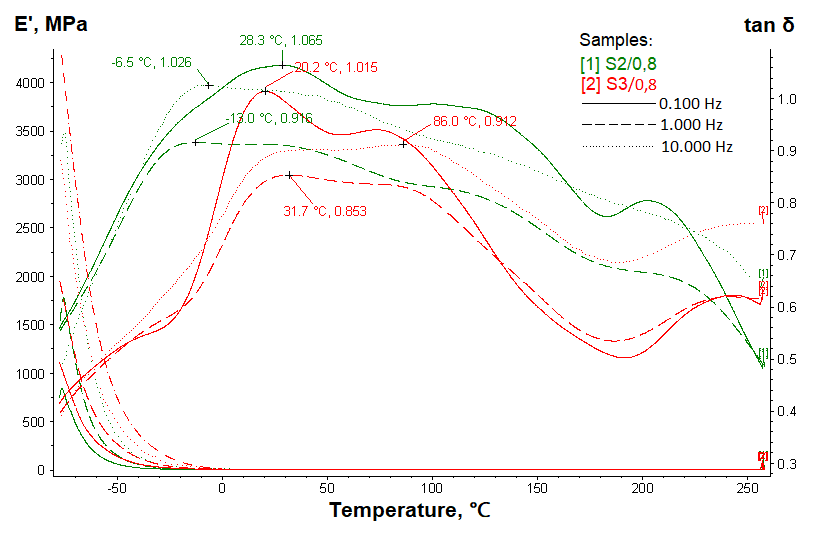
Figure 3. DMA thermogram of S2/0.8 and S3/0.8 samples.
Figure 4. The swelling kinetics of hydrogel samples as a result of the sorption capacity study, where α represents the degree of swelling in %.
Dynamic mechanical
properties
DMA is often used to confirm or supplement DSC results (34).
DSC can be used on samples that have different structures (amorphous and
crystalline). However, DSC may not be suitable for the analysis of network
structures due to the complexity of the identification process (35). DMA
is generally a more sensitive transition detection technology than DSC and Differential Thermal Analysis (DTA)
(36).
Two samples (S2/0.8 and S3/0.8) were analyzed using
DMA (Figure 3). The sample S1/0.8 turned out to be very
brittle and prone to breaking, to the extent that it could not be secured in
the instrument's cuvette.
It can be
assumed that in the S2/0.8 and S3/0.8 samples, the glass transition of CHS and
PHMG-H occurs within a similar temperature range, as it is reported that the Tg of PHMG-H is 65–85 °C (37, 38). The temperature peaks at ~86 °C for
the S3/0.8 sample, possibly confirming the active involvement of PHMG-H in the
glass transition. In contrast, the peaks at lower temperatures (0–30 °C) may be
associated with the relaxation of the amorphous regions of the polymer matrix
consisting of CHS and PHMG-H, as well as the possible influence of moisture (39). PVP likely exhibits glass transition at
higher temperatures, which is consistent with literature data indicating that
the Tg of this component can range from 100 °C to 175 °C depending on the
molecular weight (40).
Kinetics of hydrogel
swelling
Understanding the swelling dynamics and diffusion
processes of hydrogels is critical to improving their performance in drug
delivery, tissue engineering, and wound healing. The swelling
process of CHS under conditions of formed chemical crosslinks or in their
absence is explained by the theory of swelling of polymer networks, including
crystalline structures and physical entanglements. (41). In the study
(42), the swelling property of non-crosslinked CHS
hydrogel increased with time, which was attributed to the hydrophilic nature of
CHS, which is a result of the primary -OH group in CHS and the flexible matrix
nature. The degree of crosslinked CHS was lower than that of non-crosslinked CHS
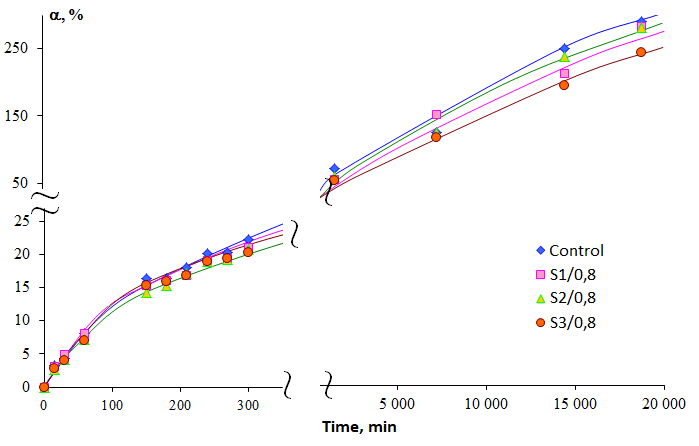
hydrogel. Figure 4
shows the sorption curve of CHS/PVP/PHMG-H
hydrogels.
The data
indicate that the Control has a higher capacity compared to the samples
containing CHS along with PHMG-H. It is possible that PHMG-H, being a
polycation, may interact with the amino groups of CHS, reducing its moisture
sorption capacity, as ionic interactions can densify the structure and decrease
the availability of hydrophilic groups in CHS. Overall, the hydrogels
containing CHS and PHMG-H behave similarly, with PHMG-H, as expected, reducing
the sorption capacity. In the short term (0–5 h), the hydrogel S1/0.8
absorbed more moisture than the hydrogels S2/0.8 and S3/0.8. However, in
long-term testing (17 h and beyond), the best sorption capacity after
Control was shown by the sample S2/0.8.
Water vapor transmission
evaluation
Values of 2000–2500 g/m2/day provide a
guaranteed range for the release of sufficient exudate and prevention of wound
dehydration (43). However,
the water vapor transmission rate of a number of commercially available wound
dressings, including hydrogels, had a wide range of 76–9360 g/m2/day
over 24 h (44). According to the Russian
standard applicable to
sterile and non-sterile medical devices that adhere to the skin due to an
adhesive layer or the adhesive properties of the material itself, the water
vapor permeability must be at least 1.5 mg/cm²/h (45). The results of the vapor
permeability measurements are shown in Table 4.
Table 4. Vapor permeability values in samples of hydrogels.
Sample
Average vapor permeability,
mg/cm2/h
Control
7.93
S2/0,8
8.34
S3/0,8
6.39
It should
be noted that sample S1/0.8 was not tested, as it exhibited poor mechanical
properties, which was also confirmed in the dynamic mechanical properties section. The comparison of vapor
permeability among the samples revealed that the most permeable sample is
S2/0.8, while the least permeable is S3/0.8. The polymer network may be more
tightly formed in samples containing CHS and PHMG-H. However, due to the
formation of ionic interactions, vapor permeability may improve, as a denser
network could facilitate more active vapor exchange, especially if water is not
as effectively retained in the structure, as indicated by the results obtained
in the kinetics of
hydrogel swelling
section.
Antimicrobial activities
of hydrogels
Although
the sample S1/0.8 was formally excluded from further testing, it was of
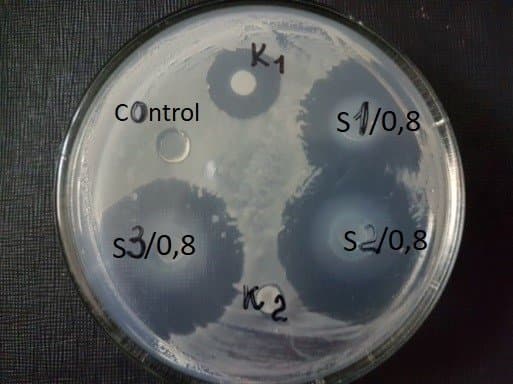
interest to investigate its potential antimicrobial activity against Methylophilus quaylei. Figure 5 shows
the inhibition zones of the hydrogels against Methylophilus quaylei.
Based on the conducted study, the sizes of the clear zones, measured in millimeters, were determined, indicating the inhibition of pathogenic microorganisms by the samples. The results are presented in Table 5.
Figure 5. Photos of inhibition zone of hydrogels against Methylophilus quaylei.
Table 5. Inhibition zone size of hydrogel samples.
Sample
Inhibition zone size, mm
K1
5.5
K2
-
Control
-
S1/0,8
10.5
S2/0,8
15
S3/0,8
14.5
The samples
S2/0.8 and S3/0.8 exhibited the most pronounced antimicrobial activity, as
evidenced by the largest clear zones. In the conditions of the conducted
experiment, the antimicrobial activity of CHS, which is mentioned in the
literature, was not confirmed.
Conclusion
In
conclusion, the CHS/PVP/PHMG-H hydrogel was developed using a solution mixing
method with stepwise pH adjustment. Complementary DSC and DMA methods were used
to study the thermal properties of the material, which helped to identify the
phase transitions more clearly. Based on the presented data, the S2/0.8 sample
demonstrated balanced mechanical, sorption, and vapor permeability properties.
In addition, the S2/0.8 sample demonstrated the best antibacterial properties,
as indicated by a large inhibition zone of pathogenic microorganisms. Thus, the
developed hydrogel can be useful for biomedical applications. Having acceptable
vapor permeability, it is assumed that this dressing will better promote wound
healing processes, and the manifestation of antibacterial properties by the
material will exclude the occurrence of septic processes.
This study focuses on the development of a chitosan-based hydrogel incorporating polyvinylpyrrolidone and polyhexamethylene guanidine hydrochloride for the rehabilitation of damaged and contaminated skin. The thermal properties of chitosan-containing films were characterized by measuring the glass transition temperature (Tg) using differential scanning calorimetry. Due to challenges in accurately determining the Tg of chitosan from experimental and literature data, an additional method, dynamic mechanical analysis, was employed. Using the literature value for the Tg of polyhexamethylene guanidine hydrochloride, the transitions of the components were determined. The estimated sorption capacity of the developed hydrogel showed that the inclusion of polyhexamethylene guanidine hydrochloride reduced the moisture content, as expected. However, the overall behavior of the hydrogels remained similar. Vapor permeability, an important factor in wound healing, was also evaluated. Antimicrobial testing revealed no activity for the chitosan control sample despite some reports in the literature, while the samples containing polyhexamethylene guanidine hydrochloride exhibited superior antimicrobial efficacy. These findings suggest that the incorporation of polyhexamethylene guanidine hydrochloride and polyvinylpyrrolidone significantly enhances both the mechanical strength and antimicrobial potential of chitosan-based hydrogels, positioning them as promising candidates for the treatment of contaminated wounds.
Yang, C.,
Liu, G., Chen, J., Zeng, B., Shen, T., Qiu, D., Huang, C., Li, L., Chen, D.,
Chen, J., Mu, Z., Deng, H., & Cai, X. (2022). Chitosan and
polyhexamethylene guanidine dual-functionalized cotton gauze as a versatile
bandage for the management of chronic wounds. Carbohydrate polymers, 282,
119130. https://doi.org/10.1016/j.carbpol.2022.119130
Goh, M.,
Du, M., Peng, W. R., Saw, P. E., & Chen, Z. (2024). Advancing burn wound
treatment: exploring hydrogel as a transdermal drug delivery system. Drug
delivery, 31(1), 2300945. https://doi.org/10.1080/10717544.2023.2300945
Lagoa T,
Queiroga MC, Martins L. An Overview of Wound Dressing Materials.
Pharmaceuticals (Basel). 2024 Aug 23;17(9):1110. doi: 10.3390/ph17091110. PMID:
39338274; PMCID: PMC11434694.
Zhou, X.,
Liu, C., Han, Y., Li, C., Liu, S., Li, X., Zhao, G., & Jiang, Y. (2022). An
antibacterial chitosan-based hydrogel as a potential degradable bio-scaffold
for alveolar ridge preservation. RSC Advances 12(50):32219-32229. DOI:
10.1039/D2RA05151F
Zöller, K.,
To, D., & Bernkop-Schnürch, A. (2025). Biomedical applications of
functional hydrogels: Innovative developments, relevant clinical trials and
advanced products. Biomaterials, 312, 122718.
https://doi.org/10.1016/j.biomaterials.2024.122718
García, M.
C., Aldana, A. A., Tártara, L. I., Alovero, F., Strumia, M. C., Manzo, R. H.,
Martinelli, M., & Jimenez-Kairuz, A. F. (2017). Bioadhesive and
biocompatible films as wound dressing materials based on a novel dendronized
chitosan loaded with ciprofloxacin. Carbohydrate polymers, 175, 75–86.
https://doi.org/10.1016/j.carbpol.2017.07.053
Kumar, R.,
Mishra, I., & Kumar, G. (2021). Synthesis and Evaluation of Mechanical
Property of Chitosan/PVP Blend Through Nanoindentation-A Nanoscale Study.
Journal of Polymers and the Environment. doi:10.1007/s10924-021-02143-0
Hasan A,
Waibhaw G, Tiwari S et al (2017) Fabrication and characterization of chitosan,
polyvinylpyrrolidone, and cellulose nanowhiskers nanocomposite films for wound
healing drug delivery application. J Biomed Mater Res A 105:2391–2404.
https://doi.org/10.1002/jbm.a.36097
Lim JI,
Kang MJ, Lee WK (2014) Lotus-leaf-like structured chitosan-polyvinyl
pyrrolidone films as an anti-adhesion barrier. Appl Surf Sci 320:614–619.
https://doi.org/10.1016/j.apsusc.2014.09.087
Lewandowska,
K. (2017) Surface properties of chitosan composites with
poly(N-vinylpyrrolidone) and montmorillonite. Polym Sci A 59:215–222.
https://doi.org/10.1134/S0965545X17020043
Li J,
Zivanovic S, Davidson PM, Kit K (2010) Characterization and comparison of
chitosan/PVP and chitosan/PEO blend films. Carbohydr Polym 79:786–791.
https://doi.org/10.1016/j.carbpol.2009.09.028
Aldana AA,
González A, Strumia MC, Martinelli M (2012) Preparation and characterization of
chitosan/genipin / poly (N-vinyl-2-pyrrolidone ) films for controlled release
drugs. Mater Chem Phys 134:317–324.
https://doi.org/10.1016/j.matchemphys.2012.02.071
Chen, J.,
Wei, D., Gong, W., Zheng, A., & Guan, Y. (2018). Hydrogen-Bond Assembly of
Poly(vinyl alcohol) and Polyhexamethylene Guanidine for Nonleaching and
Transparent Antimicrobial Films. ACS applied materials & interfaces,
10(43), 37535–37543. https://doi.org/10.1021/acsami.8b14238
Dias FGG,
Pereira LF, Parreira RLT, et al. Evaluation of the antiseptic and wound healing
potential of polyhexamethylene guanidine hydrochloride as well as its toxic
effects. Eur J Pharm Sci. 2021;160:105739. doi:10.1016/j.ejps.2021.105739
Ivanov, I.,
Kirillova, D., Erimbetov, K., & Shatalov, D. (2024). Toxicity and Safety
Analysis of Polyhexamethylene Guanidine: A Comprehensive Systematic Review.
Sciences of Pharmacy 3(3), 153-166. doi: 10.58920/sciphar0303263
Bainbridge
P, Browning P, Bernatchez SF, Blaser C, Hitschmann G. Comparing test methods
for moisture-vapor transmission rate (MVTR) for vascular access transparent
semipermeable dressings. The Journal of Vascular Access. 2023;24(5):1000-1007.
doi:10.1177/11297298211050485
Doronina,
N., Ivanova, E., Trotsenko, Y., Pshenichnikova, A., Kalinina, E., & Shvets,
V. (2005). Methylophilus quaylei sp. nov., a new aerobic obligately
methylotrophic bacterium. Systematic and applied microbiology, 28(4), 303–309.
https://doi.org/10.1016/j.syapm.2005.02.002
Mohamed
A.M., Amzaeva D.N., Pshenichnikova A.B., & Shvets V.I. (2018). Influence of
polymyxin B on the formation of biofilms by bacterium Methylophilus quaylei on
polypropylene and teflon. Fine Chemical Technologies. 13(2):31-39. (In Russ.)
https://doi.org/10.32362/2410-6593-2018-13-2-31-39
Nation RL,
Li J, Cars O, Couet W, Dudley MN, Kaye KS, Mouton JW, Paterson DL, Tam VH,
Theuretzbacher U, Tsuji BT, Turnidge JD. Framework for optimisation of the
clinical use of colistin and polymyxin B: the Prato polymyxin consensus. Lancet
Infect Dis. 2015 Feb;15(2):225-234. doi: 10.1016/S1473-3099(14)70850-3
Terekhova,
E. A., Stepicheva, N. A., Pshenichnikova, A. B., & Shvets, V. I. (2010).
Stearic acid methyl ether: a new extracellular metabolite of the obligate
methylotrophic bacterium Methylophilus quaylei.
Prikladnaia biokhimiia i mikrobiologiia, 46(2), 180–186. In Russ.
Dong, Y., Ruan, Y., Wang, H., Zhao, Y. and Bi, D. (2004), Studies on glass transition temperature of chitosan with four techniques. J. Appl. Polym. Sci., 93: 1553-1558. https://doi.org/10.1002/app.20630
Kim S.J.,
Shin S.R.,. Kim S.I. (2002), Thermal Characterizations of Chitosan and Polyacrylonitrile Semi-Interpenetrating Polymer Networks. High Performance Polymers, 14(3):309-316.
Ratto J.A.,
Hatakeyama T., Blumstein R.B. (1995), Differential scanning calorimetry investigation of phase transitions in water/ chitosan systems. Polymer, 36(15):2915-2919
Ogura, K.,
Kanamoto, T., Itoh, M., Miyashiro, H., & Tanaka, K. (1980). Dynamic
mechanical behavior of chitin and chitosan. Polymer Bulletin, 2(5), 301–304.
Doi:10.1007/bf00266704
Ahn, J.-S.,
Choi, H.-K., & Cho, C.-S. (2001). A novel mucoadhesive polymer prepared by
template polymerization of acrylic acid in the presence of chitosan.
Biomaterials, 22(9), 923–928. Doi:10.1016/s0142-9612(00)00256-8
Pizzoli,
M., Ceccorulli, G., & Scandola, M. (1991). Molecular motions of chitosan in
the solid state. Carbohydrate Research, 222, 205–213.
Doi:10.1016/0008-6215(91)89018-b
Sakurai, K.
(2000). Glass transition temperature of chitosan and miscibility of
chitosan/poly(N-vinyl pyrrolidone) blends. Polymer, 41(19), 7051–7056.
Doi:10.1016/s0032-3861(00)00067-7
Goryunova,
P. E., Sologubov, S. S., Markin, A. V., Smirnova, N. N., Zaitsev, S. D.,
Silina, N. E., & Smirnova, L. A. (2018). Thermodynamic properties of block
copolymers of chitosan with poly(D,L-lactide). Thermochimica Acta, 659, 19–26.
Doi:10.1016/j.tca.2017.10.024
Goryunova,
P. E., Sologubov, S. S., Markin, A. V., Smirnova, N. N., Mochalova, A. E.,
Zaitsev, S. D., & Smirnova, L. A. (2018). Calorimetric study of
chitosan-graft-poly(2-ethylhexyl acrylate) copolymer. Thermochimica Acta, 670,
136–141. Doi:10.1016/j.tca.2018.10.023
Ur’yash,
V.F., Korurina, N.Yu., Larina, V.N., Varlamov, V.P., Grishatova, N.V.,
Gruzdeva, A.E. (2007). Effect acidolysis on the heat capacity and physical
transformations of chitin and chitosan. Vestnik NNGU. №3. In Russ.
Lebedeva,
N. S., Guseynov, S. S., Yurina, E. S., Vyugin, A. I. (2019). Chitosan: Thermochemical Study. Russian Journal of General Chemistry,
89, 2432–2437. https://doi.org/10.1134/S107036321912017X
Khouri, J.,
Penlidis, A., & Moresoli, C. (2019). Viscoelastic Properties of Crosslinked
Chitosan Films. Processes, 7(3), 157. doi:10.3390/pr7030157
Rahman L,
Goswami J, Choudhury D. Assessment of physical and thermal behaviour of
chitosan-based biocomposites reinforced with leaf and stem extract of Tectona
grandis. Polymers and Polymer Composites. 2022;30.
doi:10.1177/09673911221076305
Cristea M,
Ionita D, Iftime MM. Dynamic Mechanical Analysis Investigations of PLA-Based
Renewable Materials: How Are They Useful? Materials (Basel). 2020 Nov 23;13(22):5302. doi:
10.3390/ma13225302
Cona, C.;
Bailey, K.; Barker, E. Characterization Methods to Determine Interpenetrating
Polymer Network (IPN) in Hydrogels. Polymers 2024, 16, 2050.
https://doi.org/10.3390/polym16142050
Ebnesajjad
S. (2006), Surface Treatment of Materials for Adhesion Bonding. Elsevier Inc.
Ryabova
V.O., Ayurova O.Zh., Ochirov O.S., Grigor’eva M.N., Stelmakh S.A.
Thermomechanical and mechanical properties of biocidal materials based on
polyhexamethylene guanidine hydrochloride and polyvinyl alcohol. Proceedings of
Universities. Applied Chemistry and Biotechnology. 2024;14(1):27–34. (In Russ.)
https://doi.org/10.21285/achb.896.
Shatalov,
D. O. (2015). Development and standardization of quality control methods for
branched oligohexamethyleneguanidine hydrochloride (Doctoral dissertation).
Moscow State University of Fine Chemical Technologies named after M.V.
Lomonosov, Moscow.
Ozerin A.
N., Perov N. S., Zelenetsky A. N., Akopova T. A., Ozerina L. A., Kechekyan A.
S., Surin N. M., Vladimirov L. V., Yulovskaya V. D. Hybrid nanocomposites based
on a graft copolymer of chitosan with polyvinyl alcohol and titanium oxide. Russian Nanotechnologies. T. 4. No. 5–6. 2009. In Russ.
Haaf, F.,
Sanner, A. & Straub, F. (1985). Polymers of N-Vinylpyrrolidone: Synthesis,
Characterization and Uses. Polym J 17, 143–152. https://doi.org/10.1295/polymj.17.143
Kaçoğlu
H.S., Ceylan Ö., Çelebi M. Determination of Swelling Kinetics and Diffusion
Mechanisms of Chemically Crosslinked Porous Chitosan Hydrogels. Open Journal of
Nano. (2024) 9–2. DOI: 10.56171/ojn.1488770
Akakuru OU,
Isiuku BO (2017) Chitosan Hydrogels and theirGlutaraldehyde-Crosslinked
Counterparts as Potential Drug Release and TissueEngineering Systems -
Synthesis, Characterization, Swelling Kinetics andMechanism. J Phys Chem Biophys 7: 256. doi:
10.4172/2161-0398.1000256
Norahan MH,
Pedroza-González SC, Sánchez-Salazar MG, Álvarez MM, Trujillo de Santiago G.
Structural and biological engineering of 3D hydrogels for wound healing. Bioact
Mater. 2022 Dec 23;24:197-235. doi: 10.1016/j.bioactmat.2022.11.019
Wu P,
Fisher AC, Foo PP, Queen D, Gaylor JD. In vitro assessment of water vapour
transmission of synthetic wound dressings. Biomaterials. 1995 Feb;16(3):171-5. doi:
10.1016/0142-9612(95)92114-l
Federal
Agency on Technical Regulating and Metrology. Medical Devices. Adhesive Wound
Dressings. General
Specifications. GOST R 53498-2019, Moscow: Standartinform, 2019.