Sciences of Phytochemistry
Journal Key Facts
Publishing Fee (APC)
No Charge
Open Access License
CC BY 4.0
Language
English

Publishing Fee (APC)
No Charge
Open Access License
CC BY 4.0
Language
English
Showing 8 Articles

Garba Dauda, Bila Hassan Ali, Bashar Bawa, Maryam Abdullahi, Asmau Nasiru Hamza, Yahaya Mohammed Sani, Muhammad Garba Magaji, Musa Isma’il Abdullahi, Aliyu Muhammad Musa, Halimatu Sadiya Hassan
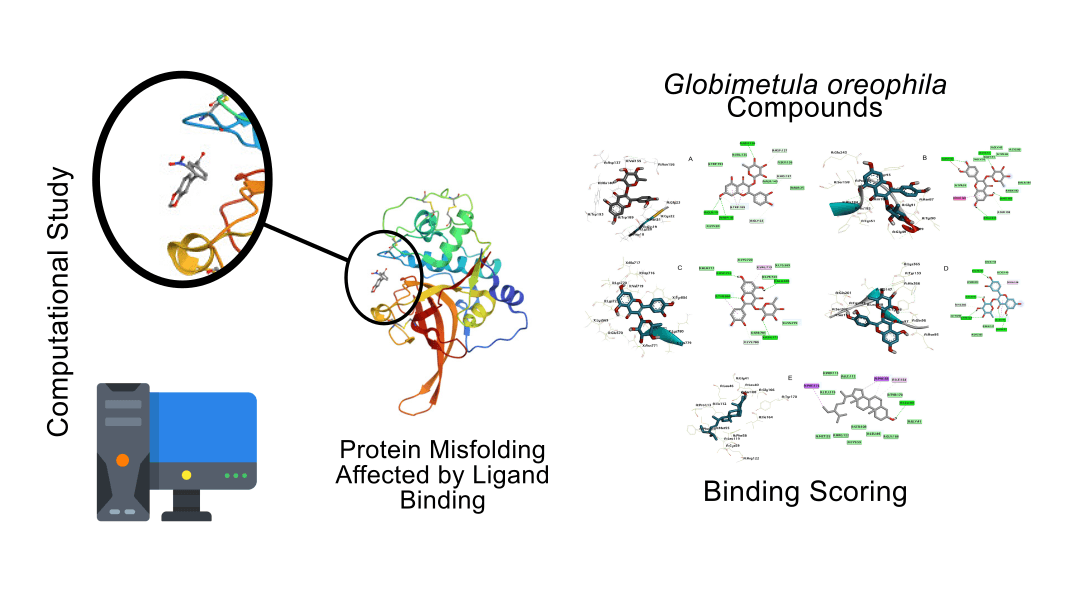
Malaria remains a major global health challenge due to its high morbidity and mortality, further complicated by growing antimalarial drug resistance. Natural products are being increasingly explored as potential sources of new therapies, with malarial proteases emerging as promising targets due to their essential roles in parasite development, invasion, egress, and hemoglobin degradation. This study evaluates the inhibitory potential of five compounds, quercetrin (DG1), dihydrostilbene (DG2), 4′-methoxy-isoliquiritigenin (DG3), stigmasterol (DG4), and quercetin (DG5), isolated from Globimetula oreophila leaves, using in silico docking against Plasmodium falciparum enzymes. Targets included falcipain-2 and falcipain-3 (cysteine proteases), SERA5 (hemoglobin-processing enzyme), PfDHFR-TS (bifunctional enzyme), and PfCDPK2 (kinase). Docking revealed strong binding affinities through hydrogen bonds, van der Waals forces, and hydrophobic interactions. DG4 showed a high affinity for PfDHFR (-10.3 kcal/mol), comparable to cycloguanil (-10.7 kcal/mol), while DG1 bound firmly to falcipain-2 (-7.9 kcal/mol), falcipain-3 (-7.5 kcal/mol), and PfCDPK2 (-9.0 kcal/mol). Binding to SERA5 ranged from -6.0 to -6.8 kcal/mol. These findings suggest that the tested compounds may act as inhibitors of vital P. falciparum enzymes, holding promise for the development of antimalarial drugs.
Sciences of Phytochemistry

Tawakaltu Omolara Tijani, Akeem Ayodele Olaiya, Dauda Garba, Ibrahim Atiku, Muhammed Ibrahim Sule
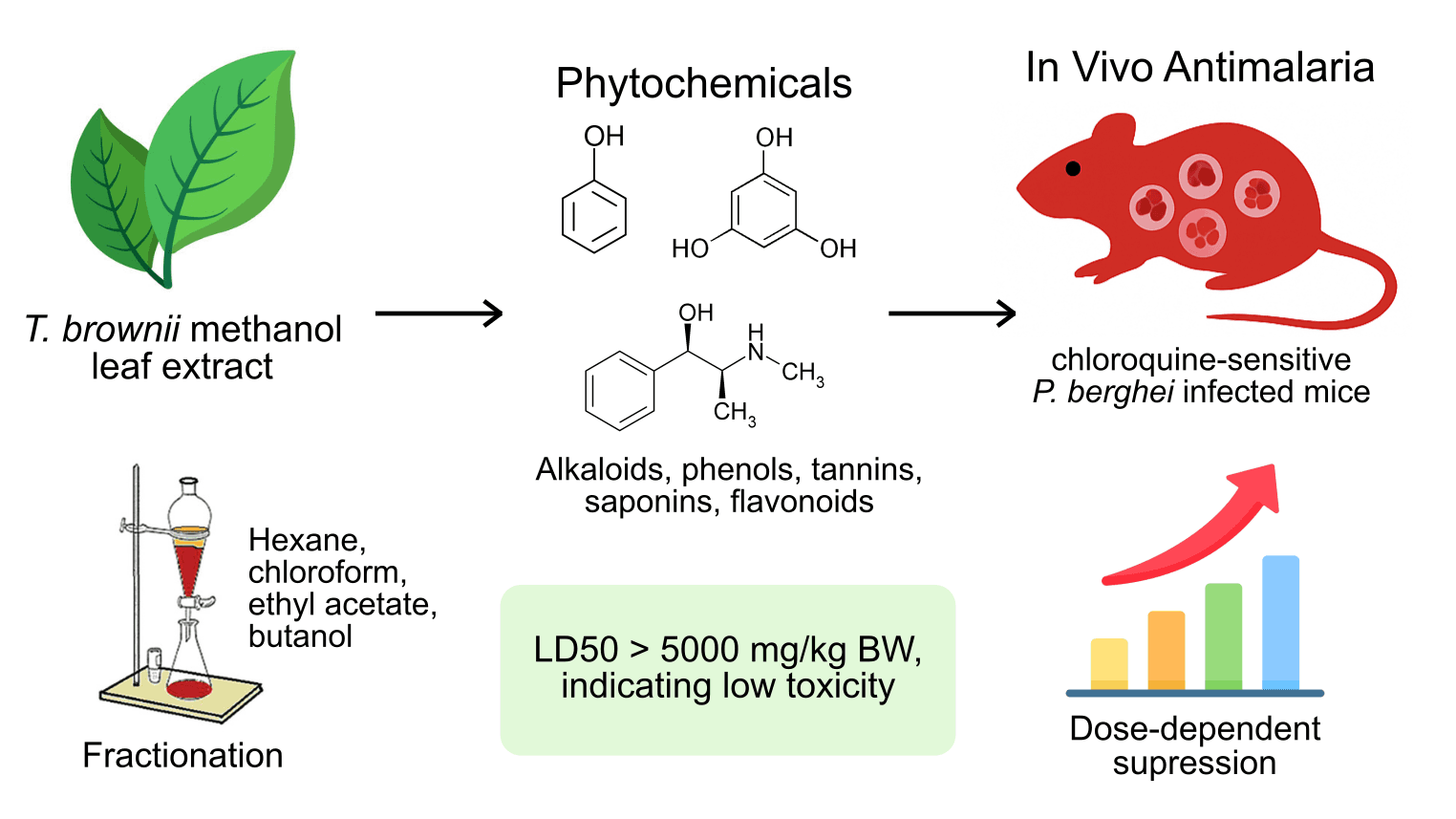
Terminalia brownii is a widely distributed African tree traditionally used to treat ailments such as cough, malaria, hepatitis, and microbial infections. The growing resistance of Plasmodium falciparum to Artemisinin combination therapy and other antimalarial drugs highlights the need for new therapies with improved potency and fewer side effects. This study analyzed the phytochemical constituents and antiplasmodial activity of T. brownii leaf extracts. The leaves were air-dried, powdered, and macerated in 70% methanol, followed by fractionation with n-hexane, chloroform, and ethyl acetate. Qualitative analysis of the methanol crude extract (MCE) revealed tannins, flavonoids, alkaloids, triterpenes, steroids, saponins, phenols, and cardiac glycosides, but not anthraquinones. Quantitative analysis showed phenols (195.45 mg/g), tannins (156.10 mg/g), and flavonoids (135.10 mg/g) as the most abundant. The ethyl acetate fraction contained phenols (103 mg/g) and tannins (69.56 mg/g) but lacked steroids and triterpenes. Antiplasmodial activity was evaluated in Plasmodium berghei-infected mice. The LD50 of the crude extract exceeded 5000 mg/kg, and significant dose-dependent suppression of parasitemia (p<0.05) was observed at 250, 500, and 1000 mg/kg. These findings support the traditional use of T. brownii against malaria and encourage further studies on its bioactive fractions and compounds.
Sciences of Phytochemistry

Phenyo Shathani, Enoch Nifise Ogunmuyiwa, Babatunde Abiodun Obadele, Oluseyi Philip Oladijo
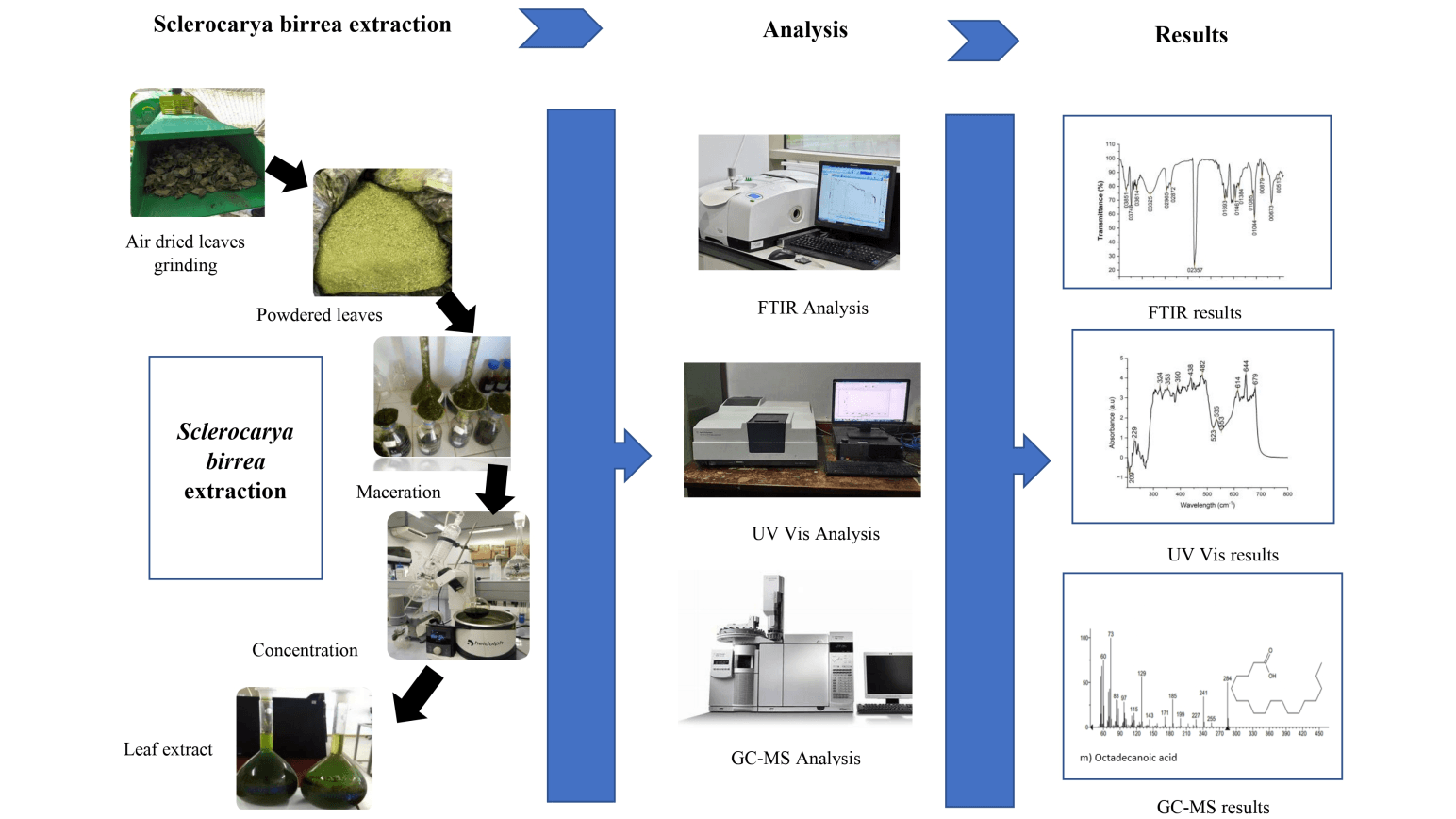
In the search for environmentally friendly corrosion inhibitors, medicinal plants rich in various phytochemicals present promising options due to their natural ability to adsorb onto metal surfaces, forming protective barriers against corrosive agents. This study examines the phytochemical profile of the ethanolic extract of Sclerocarya birrea using Fourier Transform Infrared Spectroscopy (FTIR), Ultraviolet-Visible (UV-Vis) spectroscopy, and Gas Chromatography-Mass Spectrometry (GC-MS). The UV-Vis spectrum displayed distinct absorption peaks characteristic of the extract’s components. FTIR analysis confirmed the presence of functional groups associated with alkanes, alkenes, phenols, amines, aromatics, esters, ketones, and aldehydes. GC-MS detected 17 phytochemical compounds, including notable components such as γ-sitosterol (39.44%), l-(+)-ascorbic acid 2,6-dihexadecanoate (17.37%), pagicerine (14.66%), hexadecanoic acid derivatives (10.45%), octadecanoic acid (4.34%), and phytol (3.46%). These compounds are known for their medicinal properties and chemical structures that support effective corrosion inhibition. The phytochemicals primarily contribute to corrosion protection by adsorbing onto metal surfaces, creating protective films that impede both anodic and cathodic reactions, thus reducing metal dissolution and increasing resistance. The detailed phytochemical analysis provides a solid basis for further research into S. birrea as a sustainable and effective corrosion inhibitor for various metals in different corrosive environments. This work emphasizes the extract’s potential as an environmentally friendly alternative to traditional synthetic inhibitors.
Sciences of Phytochemistry
Osahon Kennedy Ogbeide, Oscar Notoriuwa Aghedo, Faith Isimemen Akhidenor, Edward Nduka Dibie, Julius Uche Iyasele
This study evaluated the qualitative and quantitative phytochemical constituents, antioxidant potential, and antimicrobial properties of Morinda citrifolia stem. The stem extract was prepared using the maceration method with 99.8% methanol for three days at room temperature. Phytochemical and proximate compositions were analyzed using standard methods, while selected minerals were determined by atomic absorption spectrophotometry. Antioxidant activity was assessed using the DPPH free radical scavenging assay, and antimicrobial activity was examined by the agar-well diffusion method. Phytochemical screening revealed the presence of phenolics, glycosides, steroids, terpenoids, alkaloids, tannins, flavonoids, and eugenols. Proximate analysis showed moisture, lipid, protein, ash, fiber, and carbohydrate contents of 18.99%, 9.12%, 4.72%, 6.40%, 37.90%, and 22.87%, respectively. The concentrations of Na, Mg, K, Ca, Fe, Cu, and Zn were 7.51 ± 1.60, 126.67 ± 9.43, 91.12 ± 16.12, 7.59 ± 0.63, 3.50 ± 0.65, 0.02 ± 0.003, and 0.26 ± 0.086 mg/kg, respectively. The extract exhibited strong antioxidant activity with an IC₅₀ of 49.48 µg/mL, comparable to ascorbic acid (46.56 µg/mL). Antimicrobial testing showed inhibition of Staphylococcus aureus growth, with minimum inhibitory and bactericidal concentrations of 500 mg/mL and 50–200 mg/mL, respectively. These results demonstrate that M. citrifolia stem methanol extract possesses significant antioxidant and antimicrobial activities, supporting its potential as a natural therapeutic and its traditional medicinal applications.
Sciences of Phytochemistry

Praveen T., Siddappa B, Kakkalameli
This study investigated the phytochemical composition and biological activities of Strobilanthes urens leaf extracts. The proximate composition, including protein, carbohydrate, lipid content, nutritive value, and total moisture, was evaluated. Qualitative phytochemical screening revealed the presence of alkaloids, flavonoids, proteins, tannins, phenols, terpenoids, saponins, glycosides, and carbohydrates in all three extracts, except for steroids in methanol, and both terpenoids and steroids in the distilled water extract. Alkaloids, tannins, saponins, glycosides, and steroids were absent in the chloroform extract. Quantitative analysis confirmed the presence of polyphenols, flavonoids, tannins, and alkaloids, while GC–MS analysis identified 22 major bioactive compounds with potential medicinal properties. Antioxidant activity assessed by the DPPH assay showed IC₅₀ values of 79.23 ± 3.78 µg/mL in methanol and 237.00 ± 12.37 µg/mL in distilled water, with no activity in chloroform. The extracts exhibited antibacterial activity but no significant antifungal effect. Cytotoxicity evaluation by MTT assay showed IC₅₀ values against MCF-7 and HepG2 cell lines ranging from 88.19 ± 8.29 to 188.10 ± 39.99 µg/mL. Overall, the findings highlight the phytochemical richness and potential pharmacological value of S. urens leaf extracts.
Sciences of Phytochemistry

Alansheeja D. B., Mangalam S. Nair
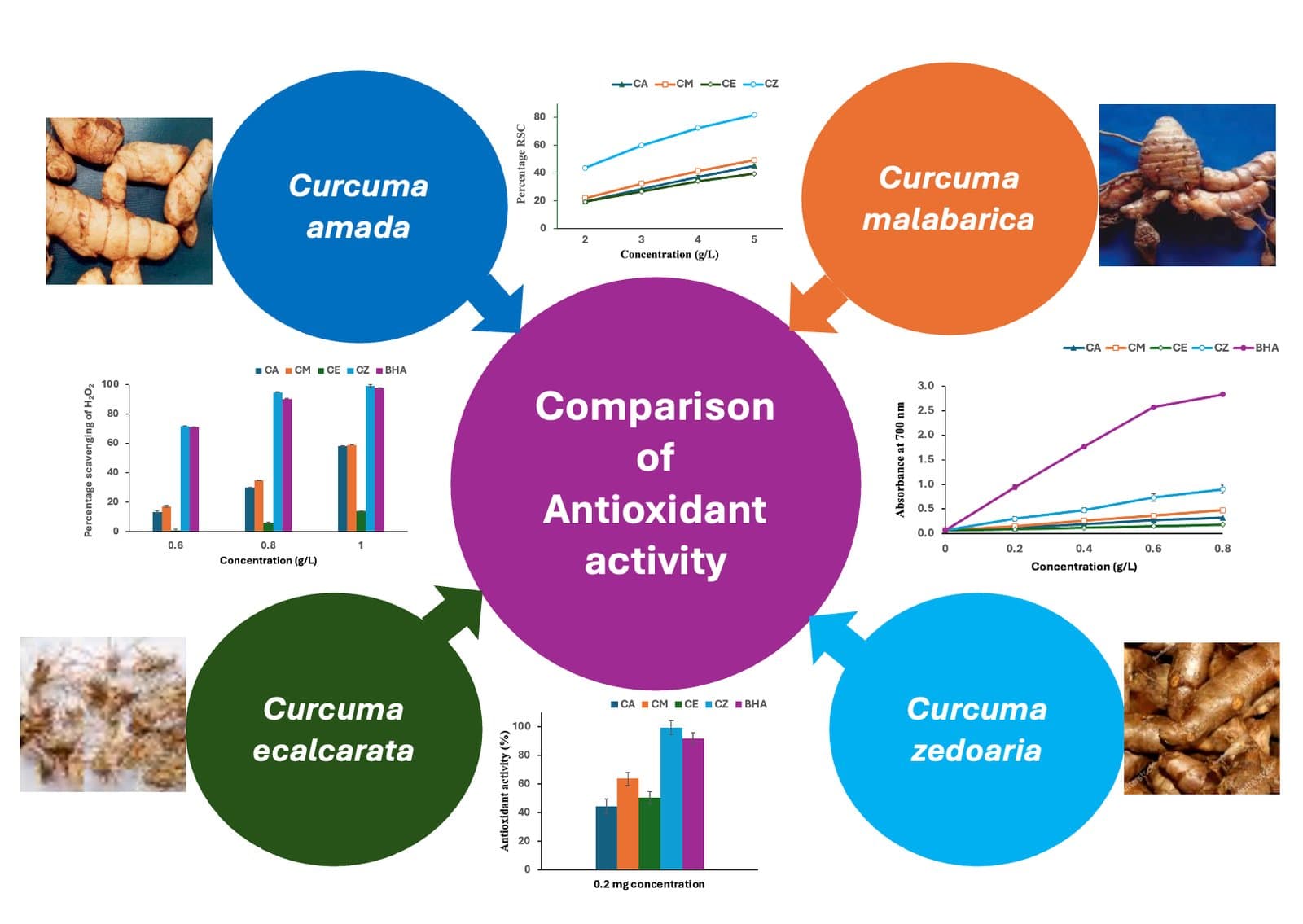
Various species belonging to the genus Curcuma are widely utilised in Asian cuisine and medicine. Among the various Curcuma species, Curcuma longa has well-established therapeutic and antioxidant effects. This study evaluated and compared the antioxidant and antiradical properties of four Curcuma species commonly used in India. The methanolic extracts were tested for DPPH radical scavenging activity, total phenolic content, total flavonoid content, total antioxidant activity (phosphomolybdenum method and beta-carotene linoleate model), hydrogen peroxide scavenging, reducing power, and metal chelating ability using various in vitro assays. According to the study, Curcuma zedoaria has the strongest antioxidant capacity, whereas Curcuma amada has a high total flavonoid concentration and metal chelating ability. When tested using the phosphomolybdenum technique, Curcuma malabarica had the highest value for antioxidant activity.
Sciences of Phytochemistry
Ibrahim Khaleel Muazu, Aisha Balanmalam Nasir, Albashir Tahir
Depression is a prevalent and debilitating mental disorder that significantly affects global health and quality of life. Conventional pharmacological treatments have adverse effects, necessitating the search for alternative therapies. This study aimed to evaluate the potential antidepressant activity of the ethanol leaf extract of Guiera senegalensis in Wistar rats. Phytochemical screening was performed to identify bioactive compounds in the extract. Acute toxicity was assessed following OECD guidelines, with doses up to 5000 mg/kg. The antidepressant activity was evaluated using the Forced Swim Test (FST) and Tail Suspension Test (TST). Experimental groups received extract doses of 25, 50, and 100 mg/kg, with control groups receiving normal saline and reference groups treated with imipramine (10 mg/kg). Statistical analyses were conducted using one-way ANOVA with Dunnett’s post hoc test. Phytochemical analysis revealed the presence of flavonoids, tannins, and saponins, which are known for their neuropharmacological properties. Acute toxicity testing showed no mortality at 5000 mg/kg, indicating a high safety profile. Behavioral assessments demonstrated that the extract significantly reduced immobility time in the FST and TST at doses of 50 and 100 mg/kg (p < 0.05), suggesting antidepressant activity. The ethanol leaf extract of G. senegalensis exhibits both antidepressant effects in animal models, supporting its traditional use in managing mood disorders. The presence of bioactive compounds suggests a pharmacological basis for its efficacy. Further research is needed to elucidate its mechanisms of action and assess its long-term safety.
Sciences of Phytochemistry

Harshal Shivaji Patil, Ashwini Sanjay Baviskar, Jaysing Mahavirsing Dinore, Ajeet Appasaheb Yelwande
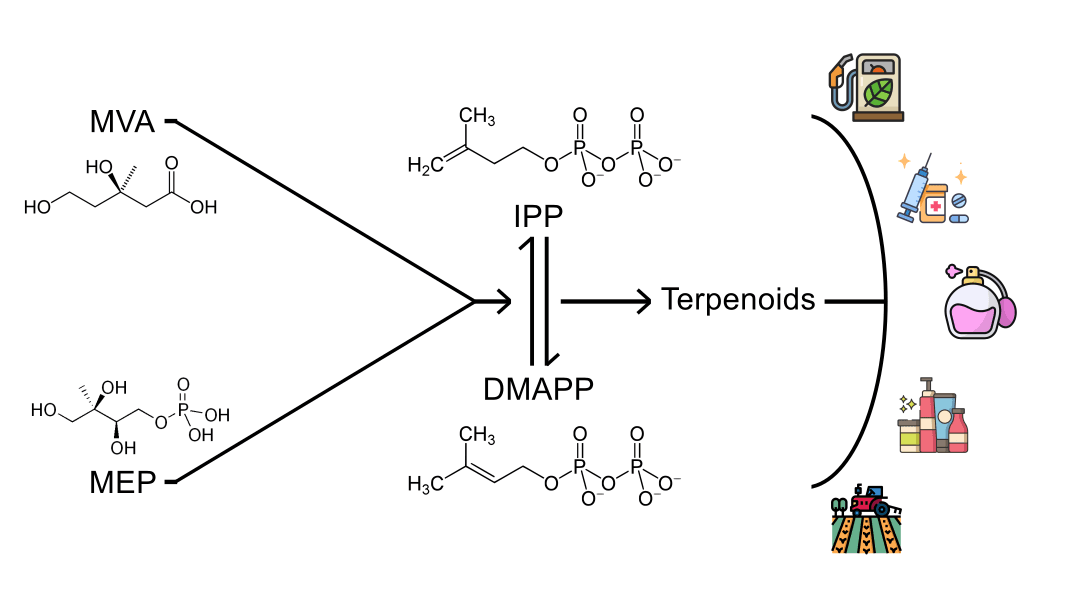
Terpenoids are the largest and most chemically diverse class of natural products, essential for plant functions such as growth regulation, defense, and ecological interactions. Their extensive chemical variety and functional versatility have also sparked significant industrial interest across many sectors. This review highlights recent progress in terpenoid biosynthesis, especially focusing on the mevalonate (MVA) and methylerythritol phosphate (MEP) pathways, which are the main routes for isoprenoid precursor production. It explores the enzymatic processes that create complex terpenoid skeletons, including detailed cyclization and rearrangement steps carried out by terpene synthases and modifying enzymes. Advances in metabolic engineering and synthetic biology now allow the reconstruction and improvement of terpenoid pathways in microbial and plant systems, greatly increasing production yields. The use of bioinformatics and systems biology tools has further supported pathway discovery, enzyme analysis, and strain development. Beyond their traditional uses in drugs, nutraceuticals, flavors, and fragrances, terpenoids are also promising for biofuels and renewable materials, emphasizing their industrial value. This review addresses challenges such as pathway complexity, precursor supply, and regulatory control, and suggests strategic directions for future research. Overall, these insights reinforce the importance of terpenoids as key targets for sustainable biotech innovations.
Sciences of Phytochemistry
Sciences of Phytochemistry (Sci. Phytochem.) is an international, peer-reviewed journal published by ETFLIN, dedicated to advancing research in all aspects of phytochemistry and plant-derived bioactive compounds. The journal provides a platform for the dissemination of original research, reviews, and scientific communications that explore the chemistry, biological activities, and applications of natural products derived from plants. We welcome contributions that deepen the understanding of the chemical diversity of plants and their potential in pharmaceuticals, nutraceuticals, agriculture, cosmetics, and environmental sustainability.